

If you’re an athlete — whether you’re a competitive high school student here in Calhoun, a weekend warrior on the recreational softball fields, or someone who simply takes their fitness seriously — back pain can feel like a serious roadblock. It sidelines your training, affects your performance, and if left unaddressed, can turn a minor issue into something that follows you for years. The good news is that back pain in athletes is one of the most common and most treatable musculoskeletal complaints we see. Understanding why it happens and what you can do about it is the first step toward getting back to the activities you love.
What is back pain in athletes?
Back pain in athletes refers to discomfort, stiffness, or pain in the upper, mid, or lower back that is directly related to sports participation, physical training, or high-demand physical activity. It can stem from acute injuries like muscle strains or stress fractures, or from repetitive overuse patterns that gradually wear down the spine’s supporting structures. In most cases, it is manageable with conservative, non-invasive care.
Why Athletes Are Prone to Back Pain
The spine is one of the most hardworking structures in the human body, and when you add the demands of athletic training on top of everyday use, the stress it absorbs multiplies significantly. Athletes place repetitive, high-force loads on their spines through running, jumping, twisting, lifting, and sudden directional changes. Over time, even well-conditioned bodies can develop imbalances, tightness, or micro-injuries that grow into noticeable pain.
There’s also the element of training error. Many athletes push too hard too fast, skip recovery days, or neglect the foundational strength work — particularly in the core and hips — that keeps the spine protected. Here in Calhoun, GA, we see this pattern frequently at Calhoun Spine Care and Wellness Center. Athletes who are passionate about their sport often prioritize sport-specific practice over injury prevention, which is completely understandable but can create vulnerabilities over time.
Biomechanical asymmetries are another major factor. If one hip is tighter than the other, if the thoracic spine lacks rotation, or if the glutes aren’t firing properly during athletic movements, the lumbar spine tends to compensate. That compensation, repeated thousands of times across weeks and months of training, is often what leads to pain.
Common Causes of Back Pain in Athletes
Not all athletic back pain looks the same, and the underlying cause matters a great deal when it comes to finding the right approach. Some of the most frequently seen causes include muscle strains and ligament sprains, which happen when soft tissues are overstretched or overloaded beyond their current capacity. These are especially common in contact sports, heavy lifting, and activities involving explosive movements.
Disc injuries are another significant source of pain. The intervertebral discs act as cushions between the vertebrae of the spine, and they can bulge, herniate, or become irritated under sustained compressive or rotational loads. Sports like football, gymnastics, tennis, golf, and weightlifting place the lumbar discs under significant stress, particularly when technique breaks down under fatigue.
Spondylolysis — a stress fracture in one of the vertebrae — is particularly common in young athletes who participate in sports that involve repeated hyperextension of the lumbar spine, such as gymnastics, volleyball, and swimming. It’s worth noting that this condition often goes undiagnosed for a period because the pain can be subtle and easy to attribute to general muscle soreness.
Sacroiliac joint dysfunction, piriformis syndrome, and facet joint irritation are also frequently contributing factors, often rooted in pelvic alignment issues or movement pattern problems that a thorough chiropractic assessment can identify. Dr. Blake Derrick at Calhoun Spine Care and Wellness Center takes a comprehensive approach to identifying the specific source of pain rather than treating symptoms in isolation.
Signs and Symptoms to Watch For
Back pain in athletes can present in a variety of ways, and paying attention to the specific character of the pain can help guide appropriate care. Dull, achy stiffness after training that clears up with movement is often a sign of muscular fatigue or mild overuse. Sharp pain that occurs during a specific movement or activity may point to an acute injury or structural problem that warrants closer evaluation.
Pain that radiates from the lower back into the buttocks, hips, or down one or both legs can suggest nerve involvement — often from disc pressure or piriformis irritation. This type of pain, sometimes described as burning, tingling, or electric, should prompt an evaluation sooner rather than later. Similarly, pain that persists beyond a few days without improvement or that worsens with rest is worth discussing with a qualified professional.
For younger athletes especially, back pain that is one-sided, located near the base of the spine, and worsens with backward bending deserves attention, as it may indicate a stress reaction or spondylolysis. Early identification in these cases can make a meaningful difference in recovery time and long-term spinal health.
How Chiropractic Care Fits Into Athletic Recovery
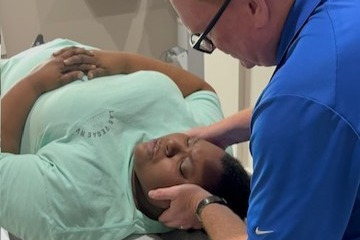
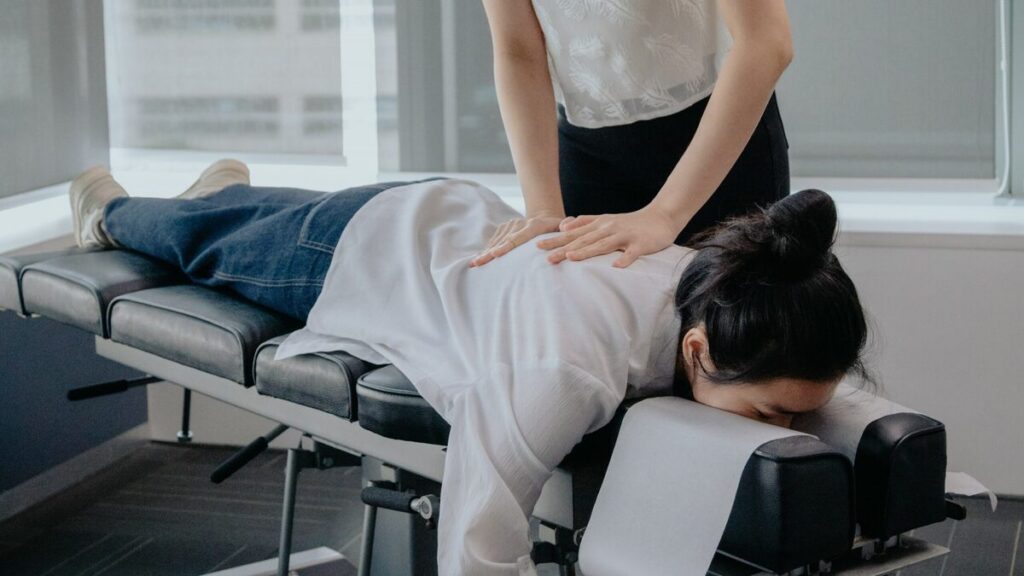
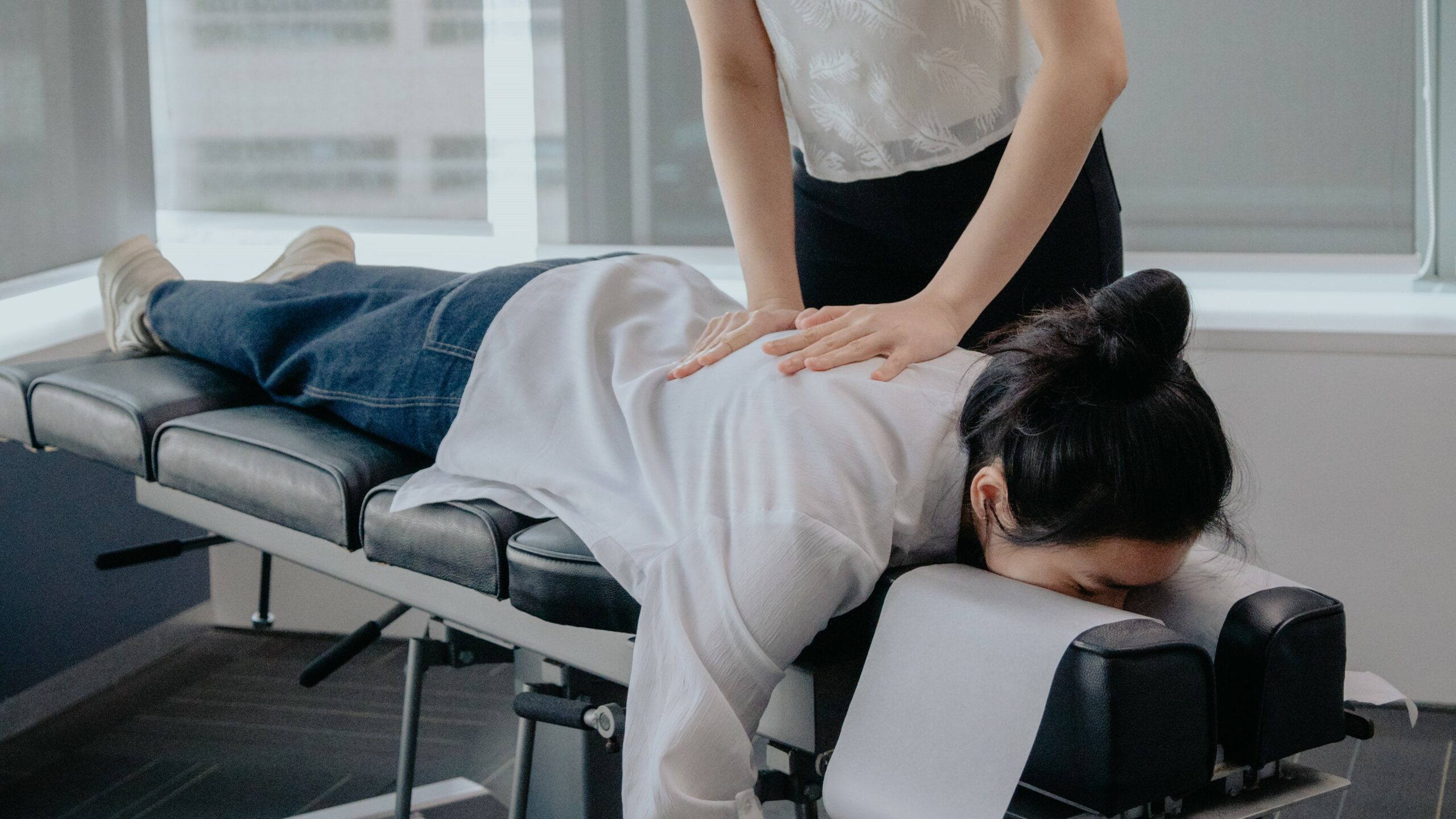
Chiropractic care offers a non-surgical, drug-free approach to managing and recovering from athletic back pain. The foundation of chiropractic treatment is the spinal adjustment — a precise, controlled force applied to vertebral joints that have become restricted or misaligned. When spinal joints aren’t moving properly, surrounding muscles tighten, nerves can become irritated, and movement patterns suffer. Restoring proper joint motion through chiropractic adjustments helps reduce pain, improve range of motion, and support the body’s natural healing process.
Beyond adjustments, chiropractors who work with active patients often incorporate soft tissue therapies, therapeutic exercise guidance, and postural and movement assessments. At Calhoun Spine Care and Wellness Center, Dr. Blake Derrick approaches athletic back pain by looking at the whole kinetic chain — not just the site of pain. That means evaluating how the hips, pelvis, thoracic spine, and even foot mechanics may be contributing to the problem.
Evidence from organizations like the American Chiropractic Association and the National Center for Complementary and Integrative Health indicates that chiropractic care is a well-supported conservative option for managing low back pain. Many professional sports teams and athletic programs have integrated chiropractic care into their overall health programs precisely because of its ability to support performance and recovery without relying on medications.
What sets chiropractic care apart for athletes specifically is its focus on function, not just pain relief. The goal is to help athletes move better, recover faster, and reduce the likelihood of reinjury — all without surgery or pharmaceuticals.
Practical Prevention Tips for Athletes
Prevention is always preferable to treatment, and the good news is that many cases of athletic back pain are preventable with the right habits in place. Core strength is often the starting point. The muscles of the core — including the deep stabilizers of the lumbar spine like the multifidus and transverse abdominis — act as a natural brace for the spine during athletic movement. When these muscles are weak or poorly coordinated, the spine is more vulnerable to injury under load.
Hip mobility and flexibility also deserve regular attention. Tight hip flexors, hamstrings, or hip rotators place additional demand on the lumbar spine, which is forced to compensate during movement. Incorporating regular mobility work into training routines, especially for the hips and thoracic spine, can reduce that compensatory stress significantly.
Load management is another key concept. Increasing training volume too quickly — in terms of mileage, weight, intensity, or frequency — is one of the most reliable predictors of overuse injuries. A general principle in sports medicine is to avoid increasing training load by more than about 10 percent per week, giving the body adequate time to adapt.
Sleep and recovery are often overlooked by dedicated athletes, but they are where tissue repair actually happens. Consistently shortchanging sleep or eliminating rest days in the name of more training can accelerate wear and tear on the spine and supporting structures. If you’re unsure whether your current training approach is balanced, a conversation with Dr. Blake Derrick at Calhoun Spine Care and Wellness Center can help you identify areas worth addressing.
When to See a Chiropractor for Athletic Back Pain
Many athletes try to push through back pain, hoping it will resolve on its own. And sometimes it does. But there are clear signs that it’s time to stop waiting and seek professional evaluation. Pain that has persisted for more than one to two weeks without meaningful improvement, pain that is affecting your performance or changing how you move, or pain that is waking you up at night are all good reasons to get checked out.
Chiropractic care is particularly appropriate when the back pain appears mechanical in nature — meaning it changes with movement, posture, or activity level. This kind of pain typically responds well to conservative care and often improves significantly with chiropractic treatment, exercise guidance, and lifestyle modification.
There are also red flag symptoms that warrant immediate medical attention rather than chiropractic care: loss of bowel or bladder control, severe or rapidly worsening neurological symptoms, a history of cancer, unexplained weight loss, or back pain following a significant trauma. In these situations, referral to appropriate medical care is always the right call. At Calhoun Spine Care and Wellness Center in Calhoun, GA, we take a thorough, patient-centered approach to assessment — and if there is ever any concern that a patient’s symptoms require medical co-management or referral, that conversation happens clearly and promptly.
Back Pain Triggers vs. Preventive Strategies
|
Common Trigger |
How It Contributes to Back Pain |
Preventive Strategy |
|---|---|---|
|
Weak core muscles |
Reduces spinal stability under load, increasing injury risk |
Regular deep core strengthening exercises |
|
Tight hip flexors |
Increases anterior pelvic tilt and lumbar stress |
Daily hip flexor stretching and mobility work |
|
Rapid training load increases |
Overwhelms tissue adaptation capacity, leading to overuse injuries |
Gradual progression, limiting increases to ~10% per week |
|
Poor lifting technique |
Excessive spinal flexion or rotation under load stresses discs |
Movement coaching and technique refinement |
|
Inadequate recovery |
Prevents tissue repair and increases cumulative fatigue |
Prioritize sleep, rest days, and active recovery |
|
Biomechanical asymmetries |
Force the spine to compensate, creating wear patterns |
Regular chiropractic assessment and movement screening |
Myths vs. Facts About Athletic Back Pain
Myth: If you’re fit and strong, you won’t get back pain.
Fact: Fitness and strength are protective, but they don’t make anyone immune to back pain. Many elite athletes experience significant back problems because high training demands can still exceed the spine’s capacity, especially when biomechanical imbalances or training errors are present. Being active is wonderful for spinal health in the long run, but it doesn’t eliminate the need for smart training practices and regular maintenance care.
Myth: You should rest completely until the pain goes away.
Fact: Complete bed rest is generally not recommended for most types of athletic back pain. Evidence suggests that staying gently active — modifying activity rather than stopping it entirely — supports faster recovery than prolonged rest. Movement encourages circulation, reduces stiffness, and prevents the muscle deconditioning that can make recovery harder. The key is guided activity modification, not inactivity.
Myth: Back pain means you need surgery.
Fact: The vast majority of athletic back pain does not require surgery. Research consistently shows that conservative care — including chiropractic treatment, physical therapy, and targeted exercise — is effective for most musculoskeletal back conditions. Surgery is typically considered only after conservative options have been thoroughly explored and have not provided adequate relief.
Myth: Chiropractic adjustments are dangerous for athletes.
Fact: Chiropractic adjustments, when performed by a licensed and trained chiropractor, are considered a safe and well-tolerated intervention for musculoskeletal conditions. Serious adverse events are rare, and chiropractic care is widely used by athletic programs at every level — from high school teams to professional sports organizations — precisely because of its safety profile and effectiveness.
Myth: Athletic back pain always comes from the spine itself.
Fact: Back pain in athletes often originates from structures other than the spine — including tight hip musculature, sacroiliac joint dysfunction, or referred pain from other regions. This is why a thorough evaluation that looks beyond the painful area is so important. Treating only the symptom without understanding its source leads to recurring problems.
Final Thoughts from Calhoun Spine Care and Wellness Center
Back pain doesn’t have to end your athletic pursuits. In most cases, with the right evaluation and a thoughtful, individualized approach to care, athletes recover well and return to full activity. The key is not ignoring the signals your body is sending and not assuming that pain is simply the price of being active.
Here at Calhoun Spine Care and Wellness Center, we are proud to serve the athletes of Calhoun, GA and the surrounding communities. Whether you’re a student athlete pushing toward a scholarship, a weekend runner logging miles on the trails, or a dedicated gym-goer working toward personal goals, Dr. Blake Derrick is here to help you move better, recover smarter, and stay as active as possible for years to come.
Our approach to athletic back pain is thorough, conservative, and always centered around what’s best for the individual patient. We’re not here to simply manage your pain — we’re here to help you understand it, address its root causes, and support you in getting back to doing what you love. If you’ve been dealing with back pain that just won’t quit, don’t wait. A comprehensive evaluation is the first step toward real answers and lasting relief.
Frequently Asked Questions
Can a chiropractor help with back pain caused by sports injuries?
Yes. Chiropractors are trained to assess and manage musculoskeletal injuries, including those resulting from sports participation. Chiropractic care can be effective for conditions like muscle strains, disc irritation, joint dysfunction, and postural imbalances that commonly affect athletes. A thorough evaluation helps determine the most appropriate care plan for each individual case.
How long does it take to recover from athletic back pain with chiropractic care?
Recovery time varies depending on the type and severity of the injury, how long it has been present, and the individual’s overall health and responsiveness to care. Some patients experience meaningful improvement within a few visits, while others with more complex presentations may require a longer course of care. Dr. Blake Derrick provides individualized recommendations based on each patient’s specific findings.
Is it safe to continue training while receiving chiropractic care for back pain?
In many cases, yes — with appropriate modifications. Continuing some level of activity is often encouraged, as it supports recovery and prevents deconditioning. However, specific activities may need to be temporarily modified or avoided depending on the nature of the injury. Your care plan will include guidance on what is and isn’t appropriate during recovery.
What types of sports most commonly lead to back pain?
Sports involving repetitive spinal loading, hyperextension, rotation, or impact — such as football, gymnastics, golf, tennis, swimming, weightlifting, and distance running — are among those most commonly associated with back injuries. That said, back pain can develop in virtually any sport when training errors, biomechanical imbalances, or inadequate recovery are present.
At what age should young athletes be evaluated for back pain?
There is no minimum age for evaluation. Back pain in adolescent athletes, particularly one-sided low back pain that worsens with activity or backward bending, should be evaluated promptly. Conditions like spondylolysis are more common in young athletes and respond best when identified and addressed early. Early intervention often leads to better long-term outcomes.
Does chiropractic care only treat the painful area, or does it address the whole body?
At Calhoun Spine Care and Wellness Center, the approach is whole-body and movement-based. Back pain rarely exists in isolation — it is often connected to movement patterns, muscle imbalances, and joint function throughout the kinetic chain. Dr. Blake Derrick evaluates contributing factors beyond the site of pain to develop a more complete and effective care strategy.
TL;DR Summary
-
Back pain in athletes is extremely common and is usually caused by muscle strains, disc irritation, biomechanical imbalances, or training errors — not permanent damage.
-
Core weakness, tight hips, rapid load increases, and poor recovery habits are among the most controllable risk factors for athletic back pain.
-
Chiropractic care offers a conservative, non-surgical approach that addresses both the symptoms and the underlying causes of athletic back pain.
-
Most athletic back pain does not require surgery or long-term medication — it responds well to guided conservative care, movement correction, and lifestyle adjustments.
-
If your back pain has lasted more than a week or two, is affecting your performance, or involves radiating leg symptoms, it’s time to have it evaluated by a professional like Dr. Blake Derrick at Calhoun Spine Care and Wellness Center in Calhoun, GA.