

If you’ve ever been stopped in your tracks by a pounding, debilitating migraine, you know just how much it can take over your life. Migraines aren’t just bad headaches; they can knock you off your feet for hours or even days, leaving you sensitive to light, sound, and movement. Many people in the Calhoun, Georgia area are searching for drug-free, long-term solutions and wondering whether visiting a chiropractor for migraines might actually make a difference. The good news? There’s a growing body of evidence suggesting that chiropractic care may offer meaningful relief for people who struggle with chronic migraines. In this article, we’ll walk you through what migraines are, why chiropractic care may help, and what you can realistically expect.
Can a chiropractor help with chronic migraines?
Chiropractic care focuses on the spine, nervous system, and musculoskeletal system — all of which can play a role in migraine development and frequency. While chiropractic is not a cure for migraines, research suggests it may help reduce the frequency, duration, and intensity of migraine episodes for some patients. It is a non-invasive, drug-free approach that addresses potential structural and neurological contributors to migraine pain.
What Are Migraines, Exactly?
Migraines are a complex neurological condition, not simply a severe headache. They are characterized by intense, often one-sided throbbing head pain that can be accompanied by nausea, vomiting, and extreme sensitivity to light and sound. Many people also experience what’s called an “aura” — visual disturbances, numbness, or tingling sensations that appear before the headache phase begins.
The World Health Organization recognizes migraine as one of the most disabling conditions worldwide. Chronic migraines are generally defined as experiencing 15 or more headache days per month, with at least eight of those meeting migraine criteria. That’s a significant burden, and it’s one that many people here in Calhoun, GA are quietly living with every single day.
What makes migraines especially frustrating is that they don’t have a single, clear-cut cause. They involve changes in brain chemistry, nerve signaling, and blood flow. Genetics plays a role, and so do a wide range of environmental and physical triggers. This complexity is exactly why so many migraine sufferers feel like they’re managing symptoms rather than addressing root causes, and it’s also why a whole-body approach like chiropractic care can be worth exploring.
Common Migraine Triggers and Contributing Factors
Understanding what sets off your migraines is an important first step toward managing them. Triggers vary widely from person to person, which is why keeping a headache journal can be so useful. That said, there are several commonly identified contributing factors that Dr. Blake Derrick and the team at Calhoun Spine Care and Wellness Center often see in patients dealing with recurrent migraines.
Muscle tension in the neck and upper back is one of the most frequently cited physical contributors. When the muscles surrounding the cervical spine (your neck) are tight or in spasm, they can place pressure on sensitive nerves and blood vessels that travel up into the head. Poor posture, especially from prolonged sitting, screen time, or forward head positioning, can significantly worsen this tension over time.
Other common triggers include hormonal fluctuations, disrupted sleep patterns, dehydration, stress, certain foods or beverages, and changes in weather or barometric pressure. Spinal misalignments, particularly in the upper cervical region, may also contribute to nervous system irritation that plays a role in migraine development. This is where chiropractic evaluation becomes especially relevant.
The Spine, Nervous System, and Migraine Connection
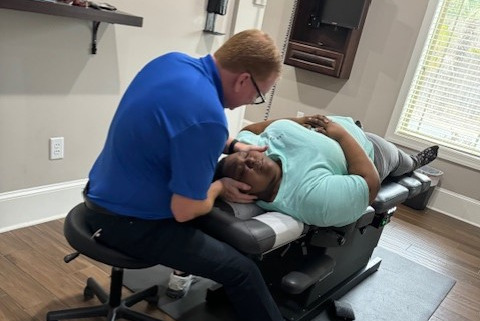
Your spine isn’t just a structural support system; it’s the protective highway for your central nervous system. The spinal cord and the nerves that branch off from it communicate constantly between your brain and the rest of your body. When the vertebrae in your spine are misaligned — a condition chiropractors call a “subluxation” — it can create irritation or interference in that communication pathway.
The upper cervical spine (the top two vertebrae in your neck, called the atlas and axis) is of particular interest when it comes to headaches and migraines. These vertebrae are located very close to the brainstem, which plays a significant role in pain processing and regulation. Misalignment in this area can affect nerve function and muscle tension in ways that may contribute to migraine episodes in susceptible individuals.
Additionally, the muscles and soft tissues of the neck and upper back are richly supplied with nerves. Chronic tension and restricted joint motion in this area can sensitize the nervous system over time — a phenomenon sometimes called “central sensitization” — making it more reactive to migraine triggers. Chiropractic care aims to restore proper alignment and motion to reduce that sensitization and support more balanced nervous system function.
How Chiropractic Care May Help With Migraines
At Calhoun Spine Care and Wellness Center, Dr. Blake Derrick takes a thorough, individualized approach to every patient. Before any care begins, he conducts a comprehensive evaluation — including a detailed health history, postural assessment, and spinal examination — to understand the specific factors that may be contributing to your migraines. No two patients are the same, and treatment plans reflect that.
Spinal manipulation, also called a chiropractic adjustment, is the primary tool used to restore proper alignment and mobility to restricted joints in the spine. When applied to the cervical and upper thoracic spine, these adjustments may help reduce muscle tension, decrease nerve irritation, and support healthier nervous system function. Research published in peer-reviewed journals, including studies referenced by the American Chiropractic Association, suggests that spinal manipulation may help reduce migraine frequency and intensity for some patients.
Beyond spinal adjustments, chiropractic care at our Calhoun, GA practice may also incorporate soft tissue therapy to release trigger points in the neck and shoulder muscles, corrective exercises to improve posture and strengthen supporting muscles, and lifestyle guidance around hydration, sleep, and ergonomics. This comprehensive approach addresses multiple layers of the problem, rather than simply masking pain with medication.
It’s also worth noting that the evidence base for chiropractic care in headache and migraine management has been growing. The Cochrane Library and other research bodies have reviewed the evidence and found that spinal manipulation may be beneficial for migraine sufferers, particularly for those with cervicogenic (neck-related) headache components. Results vary by individual, and Dr. Blake Derrick will always give you an honest picture of what you might realistically expect based on your specific situation.
Practical Tips to Support Migraine Management
While chiropractic care can be a powerful part of a migraine management strategy, the habits and choices you make every day also matter a great deal. Here are some evidence-aligned recommendations that can complement your care at Calhoun Spine Care and Wellness Center.
Posture awareness is one of the most impactful changes you can make. If you spend hours each day looking at a screen, make sure your monitor is at eye level so your head isn’t tilting forward or downward. Forward head posture places enormous strain on the cervical spine and the muscles that support it, and over time, that strain can become a significant migraine trigger. Dr. Blake Derrick often discusses ergonomic adjustments with patients because they can meaningfully extend the benefits of in-office treatment.
Staying well-hydrated is deceptively simple and often overlooked. Dehydration is a well-established migraine trigger, and many people simply don’t drink enough water throughout the day. Aim for consistent water intake rather than playing catch-up in the evenings. Similarly, maintaining a consistent sleep schedule — going to bed and waking at the same time each day — can help regulate the neurological patterns that influence migraine frequency.
Stress management is another important piece of the puzzle. Chronic stress creates physical tension throughout the body, particularly in the neck and shoulders. Practices like gentle stretching, diaphragmatic breathing, mindfulness, or even short walks can help manage that physical and emotional load. These aren’t just “feel good” suggestions. They have real physiological benefits for people living with chronic migraines.
When to See a Chiropractor for Migraines
If you’ve been dealing with recurring headaches or migraines and haven’t found lasting relief through other approaches, visiting a chiropractor for migraines is worth serious consideration. Chiropractic care is particularly worth exploring when your migraines seem to be associated with neck pain or stiffness, tension in the upper back and shoulders, poor posture from desk work, or a history of head or neck injury.
Many patients at Calhoun Spine Care and Wellness Center come in after years of relying on pain medication that no longer works as well as it used to, or after deciding they simply don’t want to depend on medication long-term. Chiropractic care offers a different path, one focused on supporting the body’s own regulatory systems rather than chemically suppressing symptoms.
That said, it’s also important to know when to seek emergency medical care. You should go to the emergency room or call 911 if you experience a sudden, severe headache unlike any you’ve had before (sometimes called a “thunderclap headache”), headache with fever and stiff neck, headache following a head injury, or headache accompanied by vision changes, confusion, weakness, or numbness. These can be signs of a serious medical condition that requires immediate evaluation. Dr. Blake Derrick and the team at Calhoun Spine Care and Wellness Center will always refer out when necessary — your safety is the top priority.
Migraine Management Approaches Compared
Approach |
Mechanism |
Invasiveness |
Long-Term Focus |
Common Use Case |
|---|---|---|---|---|
|
Chiropractic Care |
Spinal alignment, nerve function, muscle tension relief |
Non-invasive |
Yes — addresses contributing factors |
Cervicogenic component, tension-related migraines |
|
Over-the-Counter Pain Medication |
Blocks pain signals or reduces inflammation |
Non-invasive |
No — symptom management only |
Acute migraine relief |
|
Prescription Medications (e.g., triptans) |
Targets serotonin receptors and blood vessel changes |
Non-invasive |
Partial — some preventive options exist |
Moderate to severe migraine episodes |
|
Botox Injections |
Blocks nerve signals involved in pain transmission |
Minimally invasive |
Partial — requires repeat treatments |
Chronic migraine (15+ days/month) |
|
Lifestyle Modifications |
Reduces trigger exposure and systemic inflammation |
Non-invasive |
Yes — builds long-term resilience |
Complementary to all other approaches |
Myths vs. Facts About Chiropractic and Migraines
Myth: Chiropractic adjustments are only for back pain.
Fact: While chiropractic care is widely known for treating back pain, its scope extends throughout the entire musculoskeletal and nervous system. The cervical spine — your neck — is directly connected to structures and pathways involved in head pain, making chiropractic evaluation highly relevant for migraine sufferers. Many patients seek out a chiropractor for migraines specifically because of the cervical spine connection.
Myth: Chiropractic care is a cure for migraines.
Fact: Chiropractic care is not a cure for migraines. Migraines are a complex neurological condition influenced by many factors, including genetics. What chiropractic care may do — and what research suggests it can help with — is reduce the frequency, severity, and duration of migraine episodes by addressing physical contributors like spinal misalignment and muscle tension. Realistic expectations and open communication with Dr. Blake Derrick are key.
Myth: Neck adjustments are dangerous.
Fact: Serious adverse events from cervical spinal manipulation are extremely rare. When performed by a licensed, experienced chiropractor like Dr. Blake Derrick at Calhoun Spine Care and Wellness Center, adjustments are safe for the vast majority of patients. A thorough health history and examination are always conducted beforehand to identify any contraindications and ensure that care is appropriate for you specifically.
Myth: You’ll need to keep coming back forever.
Fact: While some patients do choose to continue with periodic wellness care after achieving their initial goals, chiropractic treatment plans are structured and goal-oriented. Many patients experience meaningful improvement in migraine frequency over a defined course of care. Dr. Blake Derrick will discuss a realistic care plan with you from the start, and continuing care beyond your initial goals is always your choice.
Myth: Chiropractic care and medical care are mutually exclusive.
Fact: Chiropractic care works best as part of a collaborative, integrative approach to health. Dr. Blake Derrick is happy to work alongside your primary care physician or neurologist. In fact, for chronic migraine sufferers, co-managing care between providers often leads to the best outcomes. Chiropractic care is a complement to — not a replacement for — appropriate medical care.
Final Thoughts From Calhoun Spine Care and Wellness Center
Living with chronic migraines is exhausting, isolating, and often discouraging, especially when it feels like nothing is giving you lasting relief. Here at Calhoun Spine Care and Wellness Center, we understand how deeply migraines can affect your quality of life, your work, your relationships, and your ability to simply enjoy your day. That’s why Dr. Blake Derrick is committed to taking the time to genuinely understand your history, your patterns, and your goals before recommending any course of care.
Chiropractic care won’t be the answer for every migraine sufferer, and we’ll always be honest with you about that. But for many people in the Calhoun, GA community who haven’t found lasting relief elsewhere, addressing the spine, nervous system, and surrounding musculature has made a meaningful difference. If you’ve been wondering whether seeing a chiropractor for migraines might be worth trying, we’d encourage you to come in for an evaluation and see what we find.
You deserve to feel better. And you deserve a care team that’s genuinely invested in helping you get there. We’re proud to serve the Calhoun community, and we look forward to being a part of your wellness journey.
Frequently Asked Questions
How quickly can I expect results from chiropractic care for migraines?
Results vary significantly from person to person. Some patients notice a reduction in migraine frequency within a few weeks of beginning care, while others may require a longer course of treatment before significant changes occur. Dr. Blake Derrick will set realistic expectations during your initial consultation based on your specific presentation.
Is chiropractic care safe for migraines?
For most patients, chiropractic care, including cervical adjustments, is considered safe when performed by a licensed chiropractor after a thorough evaluation. Dr. Blake Derrick conducts a detailed health history and examination before beginning any treatment to ensure the approach is appropriate for your individual circumstances.
How many visits will I need for migraine relief?
There’s no universal answer, as care plans are tailored to the individual. Factors like how long you’ve had migraines, their frequency and severity, and how your body responds to care all influence the timeline. A structured, goal-oriented plan will be discussed with you at Calhoun Spine Care and Wellness Center from the very beginning.
Can chiropractic care help with migraines caused by hormonal changes?
Hormonal migraines involve internal biochemical triggers that chiropractic care cannot directly address. However, if there is also a physical or structural component contributing to your migraines — such as neck tension or spinal misalignment — chiropractic care may still help reduce overall migraine burden. A comprehensive evaluation will help clarify what role, if any, chiropractic can play.
Do I need a referral to see a chiropractor for migraines in Georgia?
In Georgia, you generally do not need a referral from a medical doctor to see a chiropractor. You can contact Calhoun Spine Care and Wellness Center directly to schedule an evaluation. It’s always a good idea to let your primary care physician know you’re pursuing chiropractic care so your providers can coordinate effectively.
What should I expect during my first visit for migraine-related chiropractic care?
Your first visit at Calhoun Spine Care and Wellness Center will typically include a detailed health history review, discussion of your migraine patterns and triggers, a postural and spinal examination, and possibly diagnostic imaging if indicated. Dr. Blake Derrick will review his findings with you and discuss whether chiropractic care is a good fit for your situation before any treatment begins.
TL;DR Summary
-
Migraines are a complex neurological condition, and chiropractic care, while not a cure, may help reduce their frequency, intensity, and duration by addressing spinal misalignment, nerve irritation, and muscle tension.
-
The cervical spine and upper neck vertebrae are closely connected to the brainstem and pain-processing pathways, making spinal health directly relevant to migraine management.
-
Dr. Blake Derrick at Calhoun Spine Care and Wellness Center takes an individualized, thorough approach to care — starting with a comprehensive evaluation before any treatment begins.
-
Practical daily habits — including posture correction, hydration, consistent sleep, and stress management — play an important supporting role alongside chiropractic treatment.
-
Chiropractic care works best as part of a collaborative approach; always seek emergency care if you experience sudden, severe, or unusual headache symptoms that may signal a serious condition.