
Shoulder pain has a way of sneaking into every corner of daily life. Whether it’s the dull ache that greets you every morning, the sharp twinge when you reach for something overhead, or the persistent stiffness that makes driving uncomfortable, chronic shoulder pain is something that far too many people in our community simply learn to live with. But here’s the good news — you don’t have to. There are meaningful, evidence-informed lifestyle changes that can help prevent and alleviate chronic shoulder pain, and understanding what’s driving your discomfort is the first step toward lasting relief.
What Is Chronic Shoulder Pain?
Chronic shoulder pain is defined as persistent discomfort or dysfunction in or around the shoulder joint that lasts for three months or longer. Unlike acute shoulder pain from a sudden injury, chronic shoulder pain often develops gradually and is influenced by posture, repetitive movement patterns, muscle imbalances, and lifestyle habits. It can affect one or both shoulders and range from mildly annoying to deeply debilitating.
Understanding the Shoulder and Why It’s So Vulnerable
The shoulder is one of the most mobile joints in the entire human body. It can rotate, lift, pull, and reach in nearly every direction. That incredible range of motion is what makes it so useful — and also what makes it so susceptible to pain and injury. The shoulder joint relies heavily on a group of four muscles and their tendons known as the rotator cuff, along with surrounding ligaments, bursae, and the joint capsule itself, to stay stable during movement.
When any part of this complex system is under stress — from poor posture, overuse, muscle weakness, or misalignment in the cervical spine or upper thoracic spine — the shoulder can begin to break down over time. Many patients at Calhoun Spine Care and Wellness Center come in having dealt with shoulder discomfort for months or even years, often not realizing that lifestyle factors are significantly contributing to their symptoms.
Another important factor is that the shoulder doesn’t operate in isolation. The neck, upper back, and shoulder work as an integrated unit. Tension or dysfunction in the cervical spine can refer pain into the shoulder and arm. Poor thoracic posture — like the rounded-forward slouch many of us default to at a desk — directly affects how the shoulder blade sits and moves, which in turn places extra strain on the rotator cuff. Understanding these connections is key to understanding why lifestyle changes can be so effective.
Common Causes of Chronic Shoulder Pain
Chronic shoulder pain rarely has a single cause. More often, it’s the accumulation of several smaller problems that compound over time. Here in Calhoun, GA, we see a wide range of patients — from those working physically demanding jobs to those who spend long hours at a computer — and the root causes tend to fall into a handful of recognizable categories.
Postural dysfunction is one of the most common contributors. When we spend hours with our head forward and our shoulders rounded, the muscles at the front of the chest become tight and shortened while the muscles between the shoulder blades become long and weak. This imbalance creates ongoing strain at the shoulder joint and can lead to impingement, where tendons get compressed during routine arm movements.
Repetitive strain is another major factor. Overhead work, repeated lifting, and even repetitive desk tasks like typing with poor arm positioning can gradually irritate the soft tissues around the shoulder. Over time, this wear can lead to tendinopathy, bursitis, or partial rotator cuff tears that become chronically painful.
Deconditioning and muscle imbalance also play a significant role. When certain shoulder stabilizing muscles are weak — particularly the lower and middle trapezius and serratus anterior — other muscles overcompensate, and the joint mechanics become inefficient. This is a very correctable problem, but it requires awareness and consistent effort.
Spinal misalignment or restriction in the cervical and thoracic regions can alter nerve signaling and muscle activation patterns around the shoulder, creating a feedback loop of tension and discomfort. This is where chiropractic care, as offered by Dr. Blake Derrick at Calhoun Spine Care and Wellness Center, can play an especially meaningful role.
Lifestyle Changes That Make a Real Difference
The most encouraging thing about chronic shoulder pain related to lifestyle factors is that it can often be significantly improved — sometimes dramatically — by making intentional changes to how you move, sit, sleep, and care for your body. These aren’t quick fixes. They’re foundational habits that, when practiced consistently, create real structural and functional changes over time.
Improving your posture awareness is the starting point for most people. This doesn’t mean rigidly holding yourself “at attention” all day — that’s actually exhausting and unsustainable. It means becoming aware of your default positioning and gently correcting it. Aim to keep your ears roughly over your shoulders, your shoulders back and relaxed (not shrugged), and your shoulder blades sitting flat against your upper back rather than winging outward.
Moving more frequently throughout the day is equally important. The body is designed for movement, and long periods of static positioning — whether at a desk, in a car, or on a couch — allow muscles to tighten and joints to stiffen. Setting a reminder to stand, stretch, or simply reposition yourself every 30 to 45 minutes can significantly reduce cumulative shoulder strain over a workday.
Addressing sleep positioning is something many people overlook. Sleeping on your side with an arm tucked under your pillow, or lying on the affected shoulder for hours, can significantly aggravate shoulder pain. Using a pillow that keeps your neck in a neutral position and avoiding positions that internally rotate or compress the shoulder can make a noticeable difference in how you feel each morning.
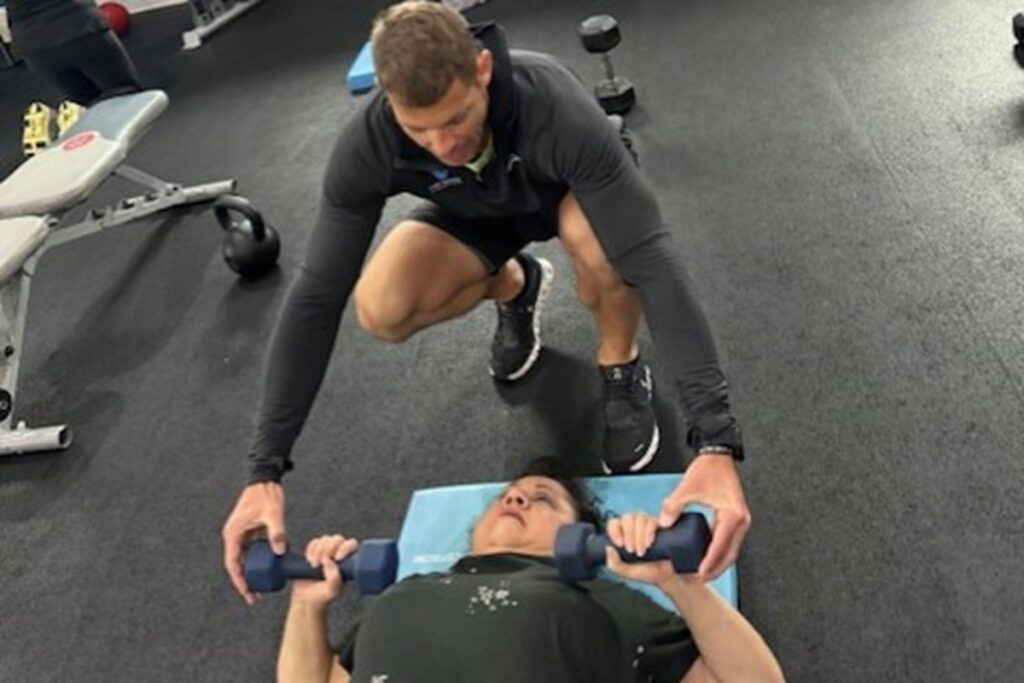
Strengthening and stretching the right muscle groups is a lifestyle change that yields some of the most lasting results. Gentle exercises that target the shoulder stabilizers — particularly the rotator cuff and the muscles that retract and depress the shoulder blades — help restore proper mechanics. Chest-opening stretches help counteract the effects of forward-rounded posture. Dr. Blake Derrick frequently guides patients at Calhoun Spine Care and Wellness Center through individualized movement recommendations as part of their care plans.
Managing stress and tension is also part of the equation. Many people carry emotional stress directly in their shoulders and upper traps, creating a chronic state of muscular tension that contributes to pain. Practices like diaphragmatic breathing, mindfulness, and even regular walks in the fresh air can help downregulate the nervous system and reduce this pattern.
How Chiropractic Care Fits Into Shoulder Pain Relief
Chiropractic care takes a whole-body, non-invasive approach to musculoskeletal health — and that makes it particularly well-suited for addressing chronic shoulder pain. Rather than simply masking symptoms with medication, chiropractic care aims to identify and address the underlying biomechanical dysfunctions contributing to your pain.
At Calhoun Spine Care and Wellness Center, Dr. Blake Derrick begins with a thorough evaluation to understand your specific pattern of pain, your posture, your movement habits, and whether spinal restrictions in the neck or upper back may be influencing your shoulder symptoms. This kind of comprehensive assessment helps ensure that care is targeted and appropriate for your unique situation.
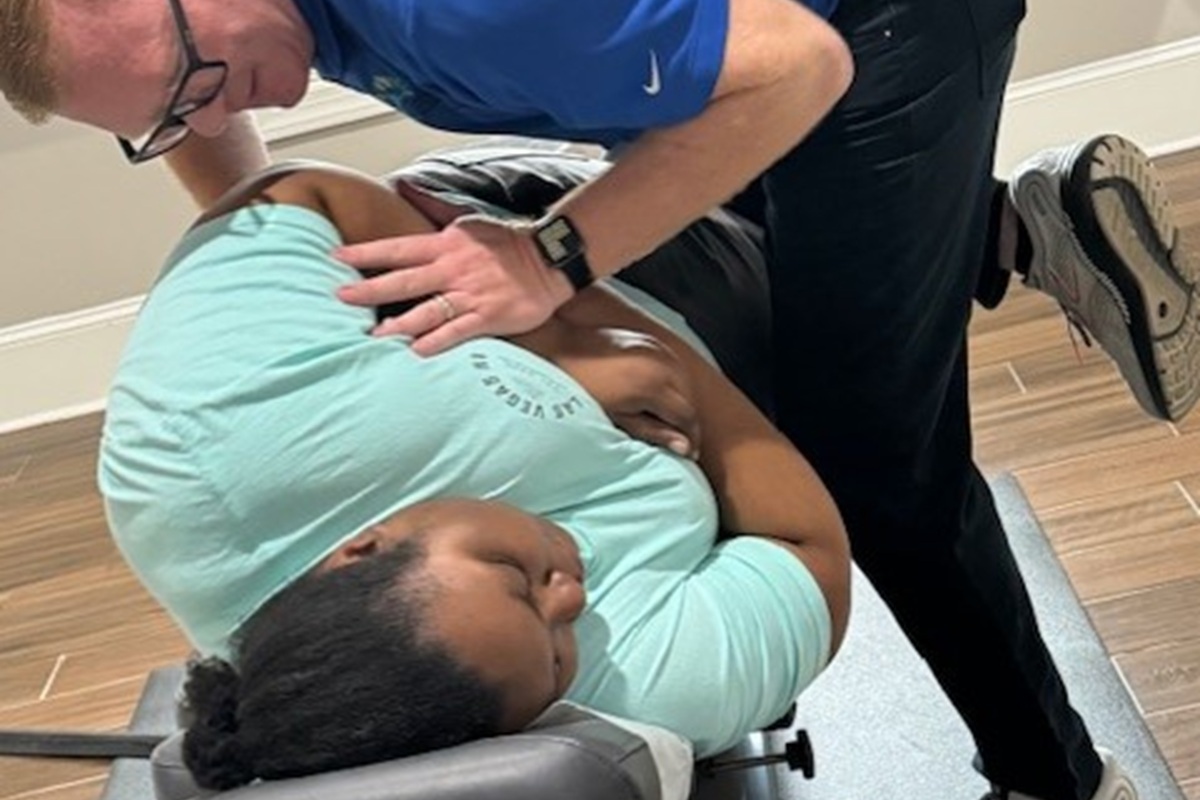
Chiropractic adjustments to the cervical and thoracic spine can help restore normal joint motion, reduce nerve irritation, and improve the way muscles around the shoulder and upper back function. Soft tissue work, therapeutic stretches, and corrective exercise guidance are often incorporated alongside spinal care to support longer-term recovery. Research suggests that a combined approach — addressing both spinal dysfunction and local shoulder mechanics — tends to produce better outcomes for patients with chronic shoulder complaints.
It’s worth emphasizing that chiropractic care is not a cure for every shoulder condition. But for many people dealing with shoulder pain rooted in posture, repetitive strain, and spinal dysfunction, it can be a meaningful and effective part of a conservative, drug-free management strategy.
Practical Tips for Your Daily Routine
Knowing what to change is helpful, but knowing how to change it is what makes the difference. Here are some realistic, chiropractor-approved adjustments you can start working into your daily habits.
When setting up your workspace, make sure your monitor is at eye level so you’re not craning your neck down or forward. Your keyboard and mouse should be positioned so your elbows are at roughly a 90-degree angle and your shoulders can remain relaxed rather than shrugged or elevated. An ergonomic chair that supports your lumbar spine will also help keep your upper body in a more favorable position throughout the day.
When exercising, be mindful of movement balance. Many people do far more pushing exercises (like bench press or push-ups) than pulling exercises (like rows or face pulls), which reinforces the muscle imbalance that contributes to shoulder pain. Incorporating pulling movements and rotator cuff-specific exercises into your routine can help restore balance to the shoulder girdle over time.
Stay hydrated and maintain a healthy overall lifestyle. Inflammation plays a role in chronic musculoskeletal pain, and general wellness habits — adequate sleep, anti-inflammatory nutrition, and stress management — all contribute to how your body manages pain and heals tissue. These aren’t just feel-good suggestions; they’re genuinely relevant to how your shoulder feels day to day.
When to See a Chiropractor for Shoulder Pain
If your shoulder pain has persisted for more than a few weeks, is worsening, or is limiting your ability to perform everyday activities, it’s a good time to have it professionally evaluated. Chronic shoulder pain that goes unaddressed tends to worsen over time, and compensatory patterns in how you move can eventually affect the neck, elbow, or even the lower back.
You should also seek evaluation if your pain wakes you up at night consistently, if you notice weakness in your arm or difficulty raising it overhead, or if your shoulder feels unstable or gives way. These can be signs of a more significant structural issue that warrants a closer look.
There are certain red flags that warrant prompt medical attention rather than conservative care alone. These include severe trauma to the shoulder, signs of infection (fever, redness, warmth), sudden and severe chest and left arm pain (which could indicate a cardiac issue), or significant neurological symptoms like numbness, tingling, or weakness radiating down the arm. In these cases, please seek emergency medical evaluation without delay.
For most cases of chronic shoulder pain rooted in posture, overuse, and lifestyle factors, a chiropractor is a highly appropriate first point of contact. Dr. Blake Derrick and the team at Calhoun Spine Care and Wellness Center in Calhoun, GA are experienced in helping patients work through exactly these kinds of challenges.
Posture Habits: What Hurts vs. What Helps
|
Posture Habit |
What It Does to Your Shoulder |
A Better Alternative |
|---|---|---|
|
Forward head posture at a desk |
Shifts load onto the cervical spine and upper traps, increasing shoulder tension |
Position monitor at eye level; keep ears over shoulders |
|
Rounded shoulders while sitting |
Tightens pectoral muscles, weakens mid-back stabilizers, impairs shoulder mechanics |
Sit with shoulder blades gently retracted and chest open |
|
Sleeping on a compressed shoulder |
Reduces circulation and places prolonged compressive load on the joint |
Sleep on your back or opposite side with proper pillow support |
|
Carrying a heavy bag on one side |
Creates asymmetrical loading and muscle imbalances over time |
Use a backpack or alternate sides; reduce bag weight |
|
Shrugging shoulders while working |
Chronically tightens the upper trapezius and can compress cervical joints |
Consciously relax shoulders away from ears throughout the day |
Myths vs. Facts About Chronic Shoulder Pain
Myth: Rest is always the best treatment for a sore shoulder.
Fact: While rest may be appropriate immediately after an acute injury, prolonged inactivity for chronic shoulder pain often makes things worse. Gentle, guided movement helps maintain circulation, prevent stiffness, and restore normal tissue function. Staying appropriately active — with professional guidance — is generally a core part of recovery.
Myth: If it’s been hurting for years, nothing can really be done about it.
Fact: Chronicity doesn’t mean permanence. Many patients at Calhoun Spine Care and Wellness Center have experienced meaningful improvement in long-standing shoulder pain after addressing the underlying biomechanical and lifestyle contributors. While results vary, chronic shoulder pain is not something you simply have to accept.
Myth: Shoulder pain always means something is torn and requires surgery.
Fact: The vast majority of chronic shoulder pain cases are not surgical in nature. Muscle imbalances, postural dysfunction, bursitis, and mild rotator cuff irritation are all very common causes of chronic shoulder discomfort that respond well to conservative care, including chiropractic care, exercise, and lifestyle modification.
Myth: Cracking or adjusting the shoulder is dangerous.
Fact: Chiropractic adjustments, when performed by a licensed, trained chiropractor, are generally considered a safe and evidence-supported approach for musculoskeletal pain. Dr. Blake Derrick performs thorough evaluations before any care is provided to ensure that it is appropriate and safe for each individual patient.
Myth: Shoulder pain is just a normal part of getting older.
Fact: While some age-related changes in joint tissue are natural, chronic pain is not simply inevitable or something to accept without question. Many age-related shoulder complaints can be significantly managed — and often improved — through consistent lifestyle habits, proper movement, and appropriate conservative care.
Final Thoughts from Calhoun Spine Care and Wellness Center
Living with chronic shoulder pain in Calhoun, GA doesn’t have to be your new normal. Whether your pain has been building for months or has been a frustrating companion for years, there are real, evidence-informed steps you can take to start feeling better. The lifestyle changes outlined in this article — improved posture, consistent movement, smarter sleep habits, balanced exercise, and stress management — are not just helpful tips. They are the foundation of lasting shoulder health.
At Calhoun Spine Care and Wellness Center, Dr. Blake Derrick is committed to helping patients in our community understand what’s driving their pain and develop a personalized plan to address it. Our approach is conservative, drug-free, and focused on empowering you with the knowledge and tools to support your own well-being. If you’ve been struggling with shoulder pain and wondering where to start, we’d love to be part of your journey toward feeling better.
You deserve to move through your days comfortably and freely. Our community here in Calhoun deserves access to caring, knowledgeable healthcare — and that’s exactly what we aim to provide.
Frequently Asked Questions
Can a chiropractor help with rotator cuff pain?
Yes, chiropractic care can be a helpful part of managing rotator cuff-related pain, particularly when the issue involves muscle imbalances, postural dysfunction, or spinal misalignment contributing to shoulder mechanics. A thorough evaluation helps determine whether chiropractic care is appropriate for your specific situation, and in some cases, referral to another provider may be recommended.
How long does it take to see improvement in chronic shoulder pain with lifestyle changes?
This varies depending on the cause and duration of pain, but many patients begin to notice gradual improvement within a few weeks of consistently applying postural corrections, movement habits, and appropriate exercise. Chronic issues generally take longer to resolve than acute ones, and combining lifestyle changes with professional care often accelerates progress.
Is chronic shoulder pain always caused by a problem in the shoulder itself?
Not always. Pain felt in the shoulder can sometimes originate from the cervical spine, upper thoracic spine, or even certain internal organs. This is why a professional evaluation is so important — it helps identify the true source of your pain so that care can be appropriately directed.
What lifestyle habits make shoulder pain worse?
Common aggravating habits include prolonged sitting with poor posture, sleeping on the affected shoulder, carrying heavy loads asymmetrically, performing repetitive overhead movements without adequate conditioning, and high levels of unmanaged stress. Identifying and modifying these patterns is an important part of managing chronic shoulder pain.
Can shoulder pain come back after it improves?
Yes, especially if the underlying lifestyle and biomechanical factors are not consistently addressed. This is why ongoing postural awareness, exercise habits, and periodic chiropractic check-ins are valuable — they help maintain the improvements achieved and reduce the risk of recurrence over time.
Is it safe to exercise with chronic shoulder pain?
In most cases, appropriate and guided movement is not only safe but beneficial. However, exercising through sharp, worsening pain is not advisable. Working with a chiropractor or appropriate healthcare provider to identify safe movement options for your specific situation is the most responsible approach.
TL;DR Summary
-
Chronic shoulder pain often develops from posture dysfunction, repetitive strain, muscle imbalances, and spinal misalignment — not just injury.
-
Meaningful lifestyle changes — including improved posture, regular movement breaks, better sleep positioning, and balanced exercise — can significantly reduce and prevent chronic shoulder pain.
-
Chiropractic care from Dr. Blake Derrick at Calhoun Spine Care and Wellness Center addresses the biomechanical root causes of shoulder pain through a safe, drug-free, individualized approach.
-
Most chronic shoulder pain does not require surgery and responds well to conservative care combined with consistent lifestyle modification.
-
If your shoulder pain has lasted more than a few weeks, is worsening, or is limiting your daily life, a professional evaluation is a worthwhile and important next step.