
Whether you’re throwing a baseball, swimming laps, lifting weights, or playing recreational tennis on the weekends, your shoulders are working hard for you. They’re one of the most mobile — and therefore most vulnerable — joints in the entire body. Shoulder injuries are incredibly common among athletes of all levels, and here in Calhoun, GA, we see this firsthand at Calhoun Spine Care and Wellness Center. The good news is that many of these injuries are preventable. Understanding how your shoulder works, what puts it at risk, and how to protect it can make all the difference in keeping you active, strong, and pain-free for the long haul.
What is shoulder injury prevention?
Shoulder injury prevention refers to the proactive steps athletes take to protect the shoulder joint and surrounding muscles, tendons, and ligaments from strain, overuse, or acute trauma. It involves proper warm-up routines, strength training, movement mechanics, and professional care when needed — all working together to reduce injury risk before pain ever starts.
Why Shoulders Are So Vulnerable in Athletes
The shoulder is a ball-and-socket joint, but unlike the hip — which is deeply seated and naturally stable — the shoulder socket is shallow by design. That shallowness is what gives you the freedom to throw a ball overhead, swim a freestyle stroke, or reach behind your back. But that same mobility comes at a cost: the shoulder depends heavily on surrounding muscles, tendons, and ligaments for stability rather than bony structure.
The rotator cuff, a group of four muscles and their tendons, is the primary stabilizer of the shoulder joint. These muscles are relatively small, and they work constantly during athletic activity. When they become fatigued, tight, or imbalanced, the entire shoulder mechanism becomes vulnerable. Add repetitive overhead motion, heavy loading, or sudden impact — and injury becomes much more likely.
At Calhoun Spine Care and Wellness Center, Dr. Blake Derrick works with athletes across many sports who share one thing in common: they didn’t know there was a problem brewing until the pain showed up. That’s why education and prevention are so central to everything we do here in Calhoun, GA.
Common Causes of Shoulder Injuries in Active Individuals
Shoulder injuries don’t always happen from a single dramatic event. In fact, the majority of sports-related shoulder problems develop gradually through patterns that are easy to overlook. Here are the most common contributors:
Overuse and repetitive stress. Overhead athletes — pitchers, swimmers, volleyball players, tennis players — repeat the same motions thousands of times per season. This puts cumulative stress on the rotator cuff and surrounding structures that can quietly wear them down over time. Rotator cuff tendinitis and impingement syndrome are frequent results of this type of overload.
Muscle imbalances. Many athletes develop strength in the “push” muscles of the chest and front shoulder while neglecting the “pull” muscles of the upper back and rear shoulder. This imbalance pulls the shoulder blade forward and out of position, altering the mechanics of the entire joint and increasing impingement risk.
Poor movement mechanics. Throwing with improper arm path, lifting with rounded shoulders, or swimming with faulty stroke mechanics places abnormal stress on the shoulder. These are technique issues that compound over time.
Inadequate recovery. Rest is part of training. Athletes who skip rest days, fail to sleep enough, or ignore early warning signs are at higher risk of cumulative injury. Tissues need time to repair after intense activity.
Trauma and acute injury. Falls, collisions, and sudden awkward movements can cause labral tears, shoulder dislocations, or AC joint sprains — injuries that require proper evaluation and care to heal correctly.
6 Things Every Athlete Should Know About Shoulder Injury Prevention
1. Warm Up Your Rotator Cuff Before Every Session
A general warm-up gets your heart rate up, but it doesn’t specifically prepare the small, stabilizing muscles of the shoulder. Before any throwing, pressing, or overhead activity, spend five to ten minutes activating the rotator cuff with targeted exercises like band external rotations, arm circles, and scapular retractions. These movements wake up the stabilizers and prepare them for the demands ahead. Dr. Blake Derrick often tells athletes that a sport-specific warm-up is one of the simplest and most overlooked injury prevention tools available.
2. Train the Back as Much as the Front
Bench pressing, push-ups, and overhead pressing are staples in most training programs. But if you’re not balancing those movements with equal attention to rows, face pulls, and rear delt work, you’re creating an imbalance that sets the stage for shoulder problems. The muscles of the upper back and posterior shoulder keep the shoulder blade properly positioned and protect the joint during activity. A balanced program is a protected shoulder.
3. Don’t Ignore Posture — It Directly Affects Shoulder Function
Forward head posture and rounded upper back (thoracic kyphosis) narrow the space inside the shoulder joint where the rotator cuff tendons pass. This is called the subacromial space, and when it’s compromised by poor posture, even normal overhead movements can pinch and irritate the tendons. Here in Calhoun, GA, many of the athletes Dr. Blake Derrick evaluates at Calhoun Spine Care and Wellness Center have posture-related factors contributing to their shoulder symptoms — something they never connected until it was assessed. Improving thoracic mobility and spinal alignment can have a direct, measurable effect on shoulder function.
4. Respect the Warning Signs Your Body Sends
Soreness after a tough training session is normal. But pain during activity, sharp pain with specific movements, weakness that wasn’t there before, or a feeling of instability in the shoulder are not things to train through. These are signals that something needs attention. Catching shoulder problems early — when they’re in the tendinitis or minor impingement stage — is dramatically easier and faster to address than waiting until there’s a significant structural problem.
5. Prioritize Recovery as Part of Your Training Plan
Sleep, hydration, nutrition, and scheduled rest days are not optional extras — they’re foundational to shoulder health. Tendons and ligaments have relatively poor blood supply compared to muscles, which means they heal more slowly and need adequate recovery time to stay healthy under training load. Building in periodization — cycles of harder and easier training weeks — helps protect the shoulder over a full season or year of activity.
6. Get a Movement Assessment Before Pain Starts
One of the most valuable things an athlete can do is have their movement patterns and shoulder mechanics evaluated by a qualified professional before any injury occurs. Identifying asymmetries, limitations in thoracic mobility, or rotator cuff weaknesses early gives you the ability to correct them proactively. This is exactly the kind of assessment that Dr. Blake Derrick provides at Calhoun Spine Care and Wellness Center — not just for those already in pain, but for athletes who want to stay ahead of problems before they develop.
How Chiropractic Care Supports Shoulder Health
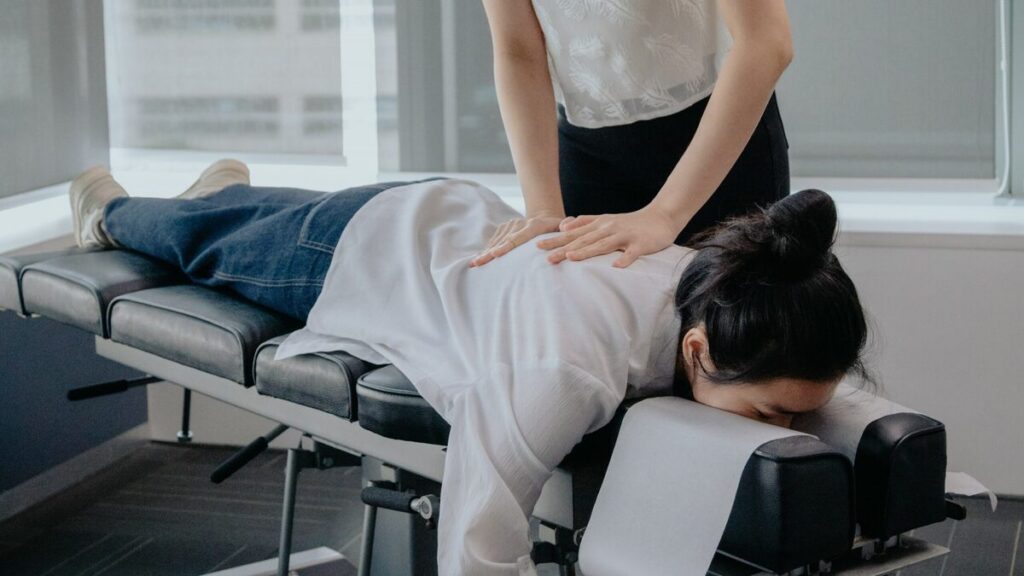
Chiropractic care is often associated with back and neck pain, but it plays a meaningful role in shoulder health as well. The shoulder doesn’t operate in isolation — it’s connected to the cervical spine, the thoracic spine, and the shoulder blade through a complex web of muscles and nerves. When the spine is misaligned or movement is restricted, it can affect how the shoulder blade moves, how nerve signals travel to shoulder muscles, and how efficiently the entire upper extremity functions.
At Calhoun Spine Care and Wellness Center, Dr. Blake Derrick takes a whole-body approach to shoulder care. This includes evaluating spinal alignment, thoracic mobility, shoulder blade positioning, and rotator cuff function. Chiropractic adjustments to the thoracic spine can improve overhead range of motion. Soft tissue work can address muscle tightness and trigger points that restrict movement. Targeted therapeutic exercises help restore strength and proper mechanics.
Evidence from organizations like the National Center for Complementary and Integrative Health (NCCIH) and the American Chiropractic Association indicates that chiropractic care can be a helpful component of conservative, non-invasive management for musculoskeletal shoulder conditions. It’s not a replacement for medical care when surgery or imaging is warranted, but for many athletes, it provides meaningful support for recovery and prevention.
When to See a Chiropractor for Shoulder Pain
You don’t have to wait until you’re sidelined to seek care. In fact, the best time to visit Calhoun Spine Care and Wellness Center is before pain becomes your primary motivator. That said, there are several clear signs that it’s time to make an appointment sooner rather than later.
If you’re experiencing pain that persists beyond a few days, discomfort during overhead activities, weakness or fatigue in the shoulder that affects your performance, or a feeling of clicking, catching, or instability in the joint, these are all appropriate reasons to seek professional evaluation. Dr. Blake Derrick can assess what’s contributing to your symptoms and guide a plan of care that fits your athletic goals.
There are also red flags that warrant urgent medical attention rather than chiropractic care alone: severe trauma with visible deformity, sudden complete loss of arm function, significant swelling following an acute injury, or radiating chest pain that may indicate a cardiac issue. In those cases, go to an emergency room or urgent care center promptly. A good chiropractor will always tell you when your situation needs a different level of care.
Healthy Shoulder Habits vs. Common Mistakes
|
Healthy Shoulder Habit |
Common Mistake |
|---|---|
|
Performing a rotator cuff-specific warm-up before overhead activity |
Jumping straight into throwing, pressing, or lifting without preparation |
|
Balancing push and pull exercises in training |
Overdeveloping chest and front shoulder while neglecting upper back |
|
Maintaining good thoracic posture throughout the day |
Sitting in prolonged forward head and rounded shoulder position |
|
Scheduling regular rest and recovery days |
Training through fatigue and soreness without adequate recovery |
|
Addressing minor shoulder discomfort early with professional evaluation |
Ignoring early warning signs until pain becomes severe or limiting |
|
Having movement mechanics evaluated proactively |
Assuming technique is fine until an injury forces a closer look |
Myths vs. Facts About Shoulder Injuries
Myth: Shoulder pain is just part of being an athlete — you have to push through it.
Fact: While some degree of muscle soreness is normal after training, pain during or after activity that doesn’t resolve with rest is a signal worth investigating. Training through significant shoulder pain often allows minor issues to progress into serious structural damage that requires far more intervention. Listening to your body is a sign of athletic intelligence, not weakness.
Myth: Only overhead athletes need to worry about rotator cuff injuries.
Fact: While overhead athletes are at higher risk, rotator cuff problems affect weightlifters, cyclists, golfers, and even people who don’t play sports at all. Any repetitive shoulder use, poor posture, or sudden trauma can damage rotator cuff structures. Athletes of every discipline benefit from preventive care and strengthening.
Myth: If you can still move your shoulder, the injury isn’t serious.
Fact: Full range of motion doesn’t rule out significant injury. Partial rotator cuff tears, labral damage, and early impingement can all be present even when shoulder movement appears mostly intact. Pain, weakness, and changes in performance quality are all important indicators that warrant evaluation, regardless of how much movement remains.
Myth: Chiropractic care is only for the spine and can’t help with shoulder problems.
Fact: Chiropractic care addresses the musculoskeletal system broadly, including the shoulder. Because the shoulder’s function is closely tied to the thoracic spine and cervical spine, spinal adjustments can directly influence shoulder mechanics. Many athletes find that combining spinal care with soft tissue therapy and corrective exercise provides meaningful improvement in shoulder function.
Myth: You should rest completely until shoulder pain goes away on its own.
Fact: Complete rest is sometimes appropriate in the short term after an acute injury, but extended inactivity can actually slow recovery by weakening the muscles that support the joint. Guided, appropriate movement is often a key part of shoulder rehabilitation. A professional evaluation helps determine what level of activity is safe and beneficial during recovery.
Final Thoughts from Calhoun Spine Care and Wellness Center
Your shoulders carry an enormous amount of responsibility every time you compete, train, or stay active. Protecting them isn’t complicated, but it does require intentionality — a good warm-up, balanced training, attention to posture, and the wisdom to seek help when something doesn’t feel right. Here in Calhoun, GA, athletes have access to the kind of thorough, whole-body care that supports long-term performance and health.
At Calhoun Spine Care and Wellness Center, Dr. Blake Derrick is passionate about helping local athletes not just recover from injury, but avoid it in the first place. Whether you’re managing a nagging ache, coming back from a past shoulder injury, or simply want to move better and perform at your best, our team is here to support your goals with evidence-informed, personalized care. We’re proud to serve the Calhoun, GA community and the active individuals and families who make it such a great place to live and compete.
Your best athletic years don’t have to be behind you — not if you take care of the body that makes them possible.
Frequently Asked Questions
How do I know if my shoulder pain needs chiropractic care or a medical doctor?
For most shoulder pain that is related to overuse, muscle imbalance, or biomechanical issues, chiropractic care is a great starting point. However, if you’ve experienced significant trauma, have visible deformity, sudden complete loss of movement, or severe swelling, seeking medical evaluation first is the right call. Dr. Blake Derrick at Calhoun Spine Care and Wellness Center will always refer out when a situation is beyond conservative care.
Can shoulder injuries be fully prevented with the right habits?
No prevention strategy eliminates all risk, but evidence consistently shows that proper conditioning, technique, recovery, and early intervention significantly reduce both the frequency and severity of shoulder injuries. Prevention is about stacking the odds in your favor, not achieving a guarantee. The more proactive you are, the better your outcomes tend to be.
How long does it take to recover from a rotator cuff strain?
Recovery time varies widely depending on the severity of the strain, the individual’s overall health, and how promptly care was initiated. Minor strains may resolve in a few weeks with appropriate rest and rehabilitation. More significant injuries can take several months. Early evaluation and guided treatment generally lead to faster, more complete recovery.
Is it safe to keep training with mild shoulder discomfort?
It depends on the nature and cause of the discomfort. Mild, general muscle soreness that resolves between sessions is usually fine to train through with modifications. Sharp pain, pain during specific movements, or discomfort that persists for more than a few days should be evaluated before continuing full training. A professional assessment can help you modify activity safely rather than stopping entirely.
What sports have the highest shoulder injury risk?
Overhead sports like baseball, softball, swimming, volleyball, and tennis carry the highest shoulder injury risk due to the repetitive nature of their mechanics. Weightlifting and contact sports also carry significant risk. That said, any athlete — regardless of sport — can develop shoulder problems through poor training habits or posture.
Does poor posture really affect shoulder health?
Yes, significantly. Rounded upper back and forward head posture reduce the space inside the shoulder joint where tendons pass, increasing the likelihood of impingement and irritation. Improving thoracic mobility and spinal alignment — which chiropractic care can directly support — has been shown to positively influence shoulder mechanics and reduce pain risk.
TL;DR
-
The shoulder is the most mobile joint in the body, which makes it highly vulnerable to both overuse and acute injury in athletes.
-
Warming up the rotator cuff, balancing push and pull training, and maintaining good posture are among the most effective tools for shoulder injury prevention.
-
Many shoulder injuries develop gradually through muscle imbalances and poor mechanics — getting a movement assessment early can catch these issues before they become painful problems.
-
Chiropractic care, including spinal adjustments and soft tissue therapy, supports shoulder health by addressing the connection between spinal alignment and shoulder function.
-
Athletes in Calhoun, GA can find proactive, personalized shoulder care with Dr. Blake Derrick at Calhoun Spine Care and Wellness Center — whether for prevention, recovery, or long-term performance support.