
If you’ve ever felt a sharp pinch in your shoulder when reaching overhead — whether grabbing something from a high shelf, swimming, or painting a ceiling — you’re not alone. Shoulder pain affects millions of people every year, and one of the most common culprits is shoulder impingement syndrome. Here in Calhoun, GA, we see patients at Calhoun Spine Care and Wellness Center who’ve been dealing with this frustrating condition for weeks, months, or even years without understanding what’s happening inside their shoulder joint. The good news? Shoulder impingement syndrome is highly treatable, especially when caught early and managed with the right conservative care approach. In this article, we’ll walk through everything you need to know about shoulder impingement: what it is, how it’s diagnosed, and what treatment options can help you get back to pain-free movement.
What is Shoulder Impingement Syndrome?
Shoulder impingement syndrome occurs when the tendons of the rotator cuff and the bursa (a fluid-filled cushion) become compressed or “pinched” in the narrow space beneath the acromion — the bony projection at the top of your shoulder blade. This repetitive compression leads to inflammation, pain, and restricted movement, especially when lifting your arm overhead or reaching behind your back.
Table of Contents
- Understanding Shoulder Anatomy and What Goes Wrong
- Common Causes and Risk Factors
- Signs and Symptoms to Watch For
- How Shoulder Impingement Syndrome Is Diagnosed
- How Chiropractic Care Can Help
- Comprehensive Treatment Options
- Practical Tips for Managing Shoulder Impingement
- When to See a Chiropractor
- Myths vs. Facts About Shoulder Impingement
- Final Thoughts
Understanding Shoulder Anatomy and What Goes Wrong
Your shoulder is one of the most mobile joints in your entire body. This impressive range of motion comes at a cost: the shoulder is also one of the most vulnerable joints to injury and dysfunction. The shoulder joint is where your upper arm bone (humerus) meets your shoulder blade (scapula), forming what’s called the glenohumeral joint. Surrounding this joint are the rotator cuff muscles — a group of four muscles and their tendons that work together to stabilize and move your shoulder.
Above the rotator cuff sits the acromion, a curved bone that forms the roof of your shoulder. Between the acromion and the rotator cuff tendons lies a small space called the subacromial space. In this narrow area, you’ll also find the subacromial bursa, a fluid-filled sac that reduces friction as your tendons glide beneath the bone during arm movements.
When everything is working properly, there’s enough room in this space for smooth, pain-free movement. But when inflammation develops, muscles become weak or imbalanced, or the mechanics of shoulder movement change, that space becomes even tighter. The rotator cuff tendons and bursa get squeezed or pinched with each overhead movement, creating the characteristic pain of shoulder impingement syndrome.
What makes this condition particularly frustrating is that it often creates a cycle: pain leads to reduced movement, which leads to muscle weakness and stiffness, which leads to worse mechanics and more impingement. Breaking this cycle requires understanding the root causes and addressing them through comprehensive care.
Common Causes and Risk Factors
Shoulder impingement syndrome rarely happens overnight. It typically develops gradually as a result of repetitive stress, poor biomechanics, or structural factors. Understanding what contributes to shoulder impingement can help you recognize your own risk factors and take preventive action.
Repetitive Overhead Activities: One of the most common causes we see at our Calhoun practice is repetitive overhead arm movements. This affects painters, construction workers, warehouse employees, and athletes who participate in sports like baseball, tennis, swimming, and volleyball. Each overhead motion narrows the subacromial space slightly, and over hundreds or thousands of repetitions, inflammation and irritation can develop.
Poor Posture and Muscle Imbalances: When you spend hours hunched over a computer, phone, or steering wheel, your shoulders roll forward and your upper back rounds. This forward shoulder posture changes the position of your shoulder blade and can reduce the space available for your rotator cuff tendons. Many residents of Calhoun, GA come to us with desk jobs or driving occupations that have contributed to these postural changes over time.
Rotator Cuff Weakness: The rotator cuff muscles don’t just move your arm — they also keep the head of your humerus centered in the shoulder socket. When these muscles become weak or don’t fire properly, your arm bone can migrate upward during movement, decreasing the subacromial space and increasing the risk of impingement.
Previous Shoulder Injuries: A history of shoulder injuries, falls, or trauma can alter the normal mechanics of your shoulder joint. Scar tissue, compensatory movement patterns, and lingering weakness can all contribute to impingement developing months or even years after the original injury.
Bone Spurs and Structural Changes: As we age, bone spurs can develop on the underside of the acromion. These bony growths further narrow the subacromial space and increase the likelihood of tendon irritation. Arthritis in the shoulder joint can also contribute to structural changes that promote impingement.
Tight Muscles and Restricted Mobility: Tightness in the chest muscles (pectorals) and certain shoulder muscles can pull your shoulder forward and limit normal shoulder blade movement. This creates abnormal mechanics that contribute to impingement with overhead activities.
Signs and Symptoms to Watch For
Shoulder impingement syndrome typically announces itself gradually. You might notice occasional discomfort at first, which slowly becomes more frequent and intense. Recognizing these symptoms early gives you the best chance for successful conservative treatment.
The hallmark symptom is pain when lifting your arm overhead or out to the side, particularly in what’s called the “painful arc” — typically between 60 and 120 degrees of arm elevation. This is when the rotator cuff tendons are most compressed under the acromion. Many patients describe a sharp, catching sensation or deep ache in the front or side of the shoulder.
Night pain is another common complaint. Lying on the affected shoulder often becomes uncomfortable or impossible. Even lying on the opposite side can cause pain as gravity pulls your affected shoulder forward. Many of our Calhoun patients report that disturbed sleep was actually what prompted them to seek care, as the constant nighttime discomfort began affecting their daily energy and mood.
You might also notice weakness when lifting or carrying objects. This isn’t always true muscle weakness — sometimes it’s pain inhibition, where your nervous system limits muscle activation to protect the inflamed tissues. Either way, activities like reaching for items on high shelves, washing your hair, or fastening a bra behind your back become difficult or painful.
Reaching behind your back, such as tucking in a shirt or grabbing your wallet from a back pocket, often becomes problematic. This internal rotation movement compresses the shoulder joint in a different way and can trigger similar impingement pain.
As the condition progresses, you may develop a dull, constant ache even at rest. Stiffness might set in, making it harder to move your arm through its full range of motion. Some people also experience clicking, popping, or grinding sensations with shoulder movement, though these aren’t always painful.
How Shoulder Impingement Syndrome Is Diagnosed
Accurate diagnosis is the foundation of effective treatment. At Calhoun Spine Care and Wellness Center, we take a thorough approach to understanding your shoulder pain, starting with your story and progressing through physical examination and, when necessary, imaging studies.
The diagnostic process begins with a detailed health history. We’ll ask about when your symptoms started, what activities make them better or worse, whether you’ve had previous shoulder injuries, and what your typical daily activities involve. Understanding your occupation, hobbies, and movement patterns helps us identify contributing factors specific to your situation here in Calhoun.
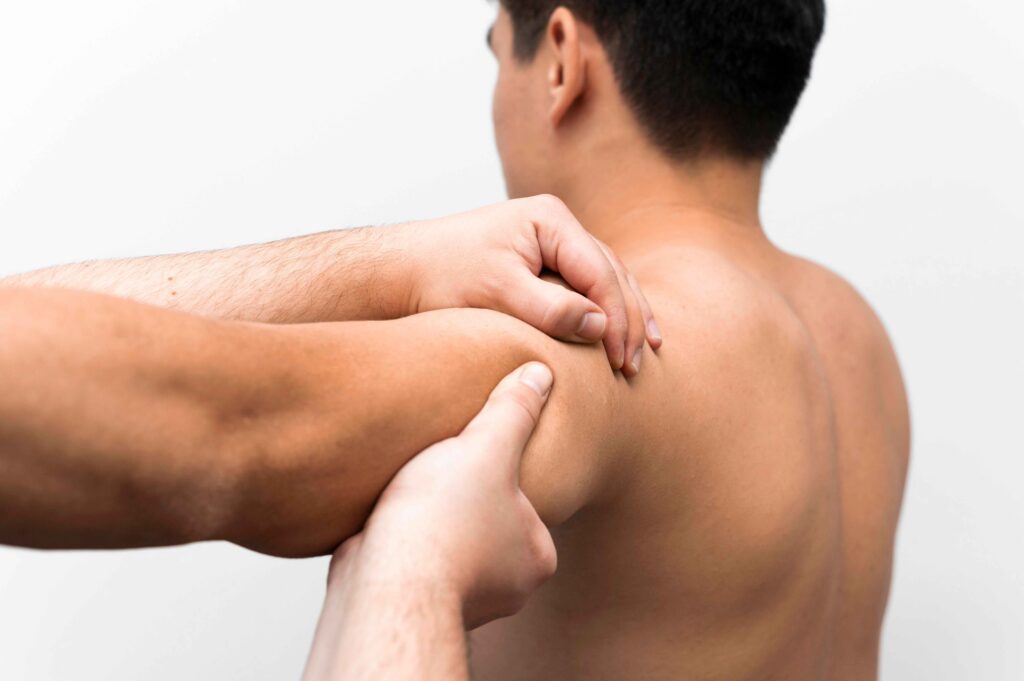
The physical examination includes several components. We’ll observe your posture and shoulder position, looking for forward shoulder posture, muscle atrophy, or asymmetries between your left and right sides. We’ll assess your active range of motion — how far you can move your arm on your own — and passive range of motion — how far we can gently move your arm for you. This comparison helps distinguish between true joint restriction and pain-limited movement.
Specific orthopedic tests help confirm shoulder impingement syndrome and rule out other conditions. The Neer test involves passively lifting your arm forward and overhead while stabilizing your shoulder blade. The Hawkins-Kennedy test rotates your arm inward while it’s held at 90 degrees forward. Pain with these tests suggests impingement. We might also perform the empty can test, painful arc test, and tests for rotator cuff strength to assess the integrity of specific tendons.
Palpation allows us to feel for tender areas, muscle tightness, and abnormal tissue texture. The front of the shoulder, the top of the shoulder near the acromion, and the insertion points of rotator cuff muscles are all examined for tenderness and tissue changes.
In many cases, the clinical examination provides enough information to confirm shoulder impingement syndrome and begin conservative treatment. However, imaging may be recommended when symptoms are severe, don’t respond to initial treatment, or when we suspect underlying structural problems. X-rays can reveal bone spurs, arthritis, or abnormal bone shapes that narrow the subacromial space. MRI provides detailed images of the rotator cuff tendons, bursa, and surrounding soft tissues, helping identify tendon tears, significant inflammation, or other complications.
It’s important to note that diagnosis isn’t just about labeling the condition — it’s about understanding the contributing factors unique to you. Two people with shoulder impingement syndrome might need very different treatment approaches based on their underlying biomechanics, postural habits, and activity demands.
How Chiropractic Care Can Help
Chiropractic care offers a comprehensive, conservative approach to shoulder impingement syndrome that addresses both symptoms and underlying causes. At Calhoun Spine Care and Wellness Center, we focus on restoring normal shoulder mechanics, reducing inflammation, and helping you develop movement patterns that prevent recurrence.
One of the key principles in chiropractic care for shoulder impingement is understanding that your shoulder doesn’t work in isolation. The position and movement of your shoulder blade, the mobility of your thoracic spine (mid-back), the alignment of your neck, and even your rib cage motion all influence shoulder function. Research indicates that manual therapy approaches, including chiropractic adjustments and soft tissue work, can help improve shoulder pain and function when combined with exercise.
Chiropractic adjustments to the shoulder joint itself can help restore normal joint motion. When joints aren’t moving properly, surrounding muscles compensate, often in ways that perpetuate impingement. Gentle, specific adjustments help the joint move more freely and allow muscles to work more efficiently. We might also adjust your thoracic spine, cervical spine, and ribs, as restrictions in these areas commonly contribute to shoulder problems.
Soft tissue therapy is equally important. We use various techniques to address tight, restricted muscles that pull your shoulder out of optimal position. This might include instrument-assisted soft tissue mobilization, trigger point therapy, or manual muscle release techniques. Releasing tight chest muscles, addressing restrictions in the shoulder capsule, and improving the flexibility of shoulder blade muscles all contribute to better shoulder mechanics.
Therapeutic exercise and rehabilitation form the foundation of long-term improvement. We’ll guide you through specific exercises designed to strengthen weak rotator cuff muscles, improve shoulder blade control, and restore balanced muscle activation patterns. These aren’t generic exercises — they’re tailored to your specific impairments and progressed as you improve.
Posture correction and ergonomic guidance help address one of the most common underlying factors: forward shoulder posture. We’ll teach you awareness strategies, provide specific postural exercises, and help you modify your work and home environments to support better shoulder position throughout the day.
What makes chiropractic care particularly valuable for shoulder impingement is the individualized, whole-person approach. We’re not just treating a painful shoulder — we’re understanding why your shoulder developed impingement in the first place and addressing those root causes to help prevent future problems.
Comprehensive Treatment Options
Shoulder impingement syndrome responds well to conservative treatment in the majority of cases. Evidence suggests that non-surgical approaches, including manual therapy, exercise, and activity modification, provide significant relief for many patients with shoulder impingement. A comprehensive treatment plan typically includes multiple complementary approaches working together.
Activity Modification and Relative Rest: This doesn’t mean complete immobilization — in fact, that can make things worse. Instead, it means temporarily avoiding or modifying activities that aggravate your symptoms while maintaining pain-free movement. If overhead reaching hurts, we’ll teach you alternative movement strategies while your shoulder heals. For athletes, this might mean adjusting training volume or technique rather than stopping completely.
Manual Therapy Techniques: Beyond chiropractic adjustments, other manual therapy techniques can be beneficial. Joint mobilization uses gentle, rhythmic movements to improve shoulder range of motion. Myofascial release targets the connective tissue surrounding muscles. These hands-on approaches help reduce pain, improve mobility, and prepare tissues for strengthening exercises.
Therapeutic Exercise Programs: Exercise is perhaps the most important long-term treatment component. A proper exercise program typically progresses through several phases. Initially, focus is on pain-free range of motion exercises and gentle rotator cuff activation. As symptoms improve, exercises progress to include resistance training for the rotator cuff, scapular stabilizers, and supporting muscles. Later stages emphasize functional movements and return to sport or work-specific activities. The key is proper progression — doing too much too soon can aggravate symptoms, while doing too little provides insufficient stimulus for healing.
Posture Training and Body Mechanics: Learning to maintain better shoulder position during daily activities reduces ongoing stress on healing tissues. This includes workplace ergonomics, sleeping position modifications, and retraining movement patterns for common activities. Many patients at our Calhoun practice find that simple changes like adjusting their computer monitor height or learning to carry bags differently makes a surprising difference in their symptoms.
Cold and Heat Therapy: Ice can help reduce acute inflammation and pain, particularly after activities that stress the shoulder. Heat helps relax tight muscles and improve blood flow to support healing. The timing and application of each depend on your specific situation and stage of healing.
Supportive Therapies: Depending on your situation, additional therapies might be beneficial. Kinesiology taping can provide feedback for better posture and support normal shoulder mechanics. Therapeutic ultrasound or electrical stimulation might be used to reduce inflammation and promote healing in some cases.
Nutritional and Lifestyle Factors: Inflammation management through diet, adequate sleep for tissue healing, proper hydration, and stress management all support your body’s recovery processes. While these aren’t direct treatments for shoulder impingement, they create an internal environment conducive to healing.
The most effective treatment plans are individualized based on your specific presentation, lifestyle demands, and goals. What works for a weekend warrior might differ from what’s best for someone with a physically demanding job or a competitive athlete. That’s why we take the time to understand your unique situation here in Calhoun and create a plan that fits your life.
Practical Tips for Managing Shoulder Impingement
Beyond formal treatment, there are many practical steps you can take daily to support your shoulder’s healing and reduce the risk of symptoms worsening. These strategies complement professional care and empower you to take an active role in your recovery.
Modify Your Sleeping Position: Avoid sleeping directly on the affected shoulder. If you’re a side sleeper, sleep on your non-painful side with a pillow hugged to your chest to support your arm. Back sleepers can place a pillow under their elbow to prevent the shoulder from rolling forward. The goal is to maintain a neutral shoulder position throughout the night.
Adjust Your Workspace Ergonomics: Position your computer monitor at eye level to discourage forward head posture. Keep your keyboard and mouse close enough that you don’t have to reach forward. Your chair should support your lower back and allow your feet to rest flat on the floor. Take regular breaks to stand, move, and reset your posture every 30-45 minutes.
Practice Shoulder Blade Awareness: Throughout the day, check in with your shoulder position. Are they rounded forward? Gently draw your shoulder blades back and down — not in an exaggerated military posture, but just enough to open your chest slightly. This small awareness practice, repeated consistently, can gradually retrain your default posture.
Modify Overhead Activities: When you need to reach overhead, consider using a step stool instead of reaching at your maximum range. When possible, bring items down to a more comfortable height rather than working overhead for extended periods. If your work requires overhead activity, take frequent breaks and perform gentle shoulder circles to maintain circulation.
Warm Up Before Activity: Whether you’re about to exercise, do yard work, or tackle a home improvement project, spend five minutes warming up your shoulders. Gentle arm circles, shoulder shrugs, and light movements through your available pain-free range prepare your tissues for activity and reduce injury risk.
Use Proper Lifting Technique: When lifting objects, avoid starting from an overhead position if possible. Bring items down to chest or waist level before carrying them. When you must lift overhead, use both arms when possible and avoid twisting motions while holding weight overhead.
Stay Consistently Active: Gentle, pain-free movement throughout the day is better than long periods of immobility followed by sudden activity. Walking, light household activities, and your prescribed exercises help maintain circulation and prevent stiffness from setting in.
Listen to Your Body: Pay attention to your symptoms and adjust activities accordingly. Some discomfort during rehabilitation exercises is normal, but sharp pain or symptoms that persist for hours after activity suggest you’ve done too much. Learning this balance is an important part of recovery.
When to See a Chiropractor
Not every episode of shoulder discomfort requires professional intervention, but knowing when to seek care can prevent a minor issue from becoming a chronic problem. There are several situations where evaluation and treatment at Calhoun Spine Care and Wellness Center is appropriate.
If your shoulder pain has persisted for more than a week or two despite rest and home care measures, it’s time for a professional assessment. While minor shoulder aches might resolve on their own, pain that lingers suggests an underlying mechanical or inflammatory problem that needs attention.
Progressive worsening of symptoms is another clear indicator. If your pain is gradually getting worse, spreading to other areas, or if you’re noticing increasing weakness or restricted motion, early intervention can prevent further deterioration and often leads to faster recovery.
When shoulder pain is interfering with your daily activities — work, exercise, hobbies, or even basic self-care tasks like dressing or grooming — it’s affecting your quality of life in ways that deserve professional attention. You don’t have to live with limiting pain.
Night pain that disrupts your sleep is particularly important to address. Sleep disturbance not only makes you miserable during the day but also impairs your body’s ability to heal. If you’re regularly waking up due to shoulder pain or can’t find a comfortable sleeping position, this is a sign that inflammation or mechanical dysfunction needs to be addressed.
If you’ve tried over-the-counter pain relievers, ice, heat, and rest without significant improvement, conservative chiropractic care offers additional options that address the underlying causes rather than just masking symptoms.
There are also some red flag symptoms that warrant immediate medical attention. Seek urgent care if you experience sudden, severe shoulder pain following trauma or injury, complete inability to move your shoulder or arm, visible deformity of the shoulder, signs of infection (fever, redness, warmth, swelling), chest pain or difficulty breathing accompanying shoulder pain, or weakness or numbness extending down your arm that doesn’t resolve.
For residents of Calhoun, GA dealing with shoulder pain, the chiropractors at Calhoun Spine Care and Wellness Center can perform a thorough evaluation, provide an accurate diagnosis, and develop a treatment plan tailored to your needs. Early intervention typically leads to better outcomes and shorter recovery times.
Treatment Approaches Comparison
| Treatment Approach | Primary Benefits | Typical Timeline | Best For |
|---|---|---|---|
| Chiropractic Adjustments & Manual Therapy | Restores joint mobility, reduces muscle tension, addresses biomechanical dysfunction | Noticeable improvement in 2-4 weeks with consistent care | Mechanical dysfunction, postural issues, restricted mobility |
| Therapeutic Exercise & Rehabilitation | Strengthens rotator cuff, improves shoulder blade control, prevents recurrence | Initial benefits in 3-4 weeks; ongoing improvement over 8-12 weeks | Muscle weakness, imbalances, long-term prevention |
| Activity Modification & Ergonomic Changes | Reduces ongoing stress, allows healing, prevents symptom aggravation | Immediate reduction in pain triggers; supports healing timeline | Work-related or activity-specific impingement |
| Postural Training & Body Mechanics | Addresses root causes, improves daily movement patterns, long-term prevention | Gradual improvement over 4-8 weeks as new patterns develop | Forward shoulder posture, desk workers, chronic cases |
Myths vs. Facts About Shoulder Impingement
Myth: Shoulder impingement always requires surgery
Fact: The vast majority of shoulder impingement cases respond well to conservative treatment. Research indicates that non-surgical approaches, including manual therapy, exercise, and activity modification, provide significant relief for most patients. Surgery is typically reserved only for cases that don’t improve after several months of appropriate conservative care.
Myth: You should rest your shoulder completely until the pain goes away
Fact: Complete immobilization actually tends to make shoulder impingement worse by causing stiffness and muscle weakness. The goal is relative rest — avoiding aggravating activities while maintaining pain-free movement. Gentle, appropriate movement and exercise are essential parts of recovery and help maintain shoulder function while healing occurs.
Myth: Shoulder impingement is just part of getting older and can’t be prevented
Fact: While structural changes like bone spurs become more common with age, shoulder impingement is not an inevitable part of aging. Many older adults maintain healthy, pain-free shoulders. Proper posture, regular strengthening exercises, balanced muscle development, and good movement mechanics can significantly reduce your risk at any age.
Myth: If you have shoulder impingement, you can never do overhead activities again
Fact: With proper treatment, rehabilitation, and technique modifications, most people can safely return to overhead activities, including sports and occupational tasks. The key is addressing the underlying causes, building adequate strength and stability, and learning proper mechanics. Many athletes successfully return to competitive overhead sports after shoulder impingement treatment.
Myth: Shoulder pain that gets better with rest means the problem is cured
Fact: Pain reduction is a positive sign, but it doesn’t necessarily mean the underlying dysfunction has been corrected. If the biomechanical issues, muscle imbalances, or postural factors that contributed to impingement haven’t been addressed, symptoms often return when you resume normal activities. Complete rehabilitation prevents recurrence.
Final Thoughts
Shoulder impingement syndrome is one of those conditions that can significantly impact your daily life — from work productivity to your ability to enjoy hobbies and recreational activities. The good news is that with accurate diagnosis, comprehensive conservative treatment, and your active participation in the healing process, most people experience substantial improvement and return to their normal activities.
Here at Calhoun Spine Care and Wellness Center, we’re committed to helping our neighbors in Calhoun, GA understand their shoulder pain and find effective, non-invasive solutions. We believe that education empowers you to take an active role in your recovery, and that addressing the root causes of shoulder impingement — not just the symptoms — provides the best long-term outcomes.
If you’re dealing with shoulder pain that’s limiting your life, you don’t have to just live with it or jump straight to more invasive options. Conservative chiropractic care offers a thorough, individualized approach that addresses your unique situation. Whether your shoulder pain developed from years of desk work, weekend warrior activities, or the physical demands of your job, we can help you understand what’s happening and create a plan to get you back to the activities you love.
Remember, early intervention typically means faster recovery and better outcomes. Don’t wait until shoulder pain has been interfering with your life for months or years. Reach out to Calhoun Spine Care and Wellness Center today, and let’s work together to get your shoulder moving comfortably again.
Frequently Asked Questions
How long does it take for shoulder impingement syndrome to heal?
Recovery time varies based on severity and how long you’ve had symptoms, but most people notice significant improvement within 4-8 weeks of consistent conservative treatment. Mild cases caught early might improve in 2-3 weeks, while chronic cases may take 12 weeks or longer. Following your treatment plan consistently and addressing underlying factors gives you the best chance for complete recovery.
Can I still exercise with shoulder impingement syndrome?
Yes, but you’ll need to modify your activities initially. Avoid overhead movements and activities that trigger sharp pain, but maintain pain-free movement and exercise. Swimming might need to be paused temporarily, but walking, lower body exercises, and modified upper body work are typically fine. Your chiropractor can guide you on appropriate exercises that support healing rather than aggravating inflammation.
Will shoulder impingement syndrome come back after treatment?
Recurrence is less likely when you address underlying causes like posture, muscle imbalances, and movement patterns. Completing your full rehabilitation program and maintaining shoulder strength and mobility through regular exercise provides good protection. Many people successfully prevent recurrence by applying what they learned during treatment to their daily habits and activities.
Is it normal for shoulder impingement to affect my neck too?
Yes, it’s quite common to experience neck discomfort alongside shoulder impingement. The muscles and nerves in these areas are interconnected, and shoulder dysfunction can cause compensatory tension in the neck. Additionally, neck posture affects shoulder mechanics, so neck and shoulder problems often occur together. Comprehensive treatment addresses both areas for better overall results.
What’s the difference between shoulder impingement and a rotator cuff tear?
Shoulder impingement involves compression and inflammation of the rotator cuff tendons and bursa but the tendons remain intact. A rotator cuff tear means the tendon has actually torn or separated from the bone. Chronic, untreated impingement can eventually lead to tendon weakening and tears, which is why addressing impingement early is important. Clinical examination and sometimes imaging help distinguish between these conditions.
Should I use heat or ice for shoulder impingement syndrome?
Ice is typically better for acute inflammation and sharp pain, especially after activities that aggravate your shoulder. Apply ice for 10-15 minutes several times daily. Heat helps with muscle tension and stiffness, and can be used before gentle stretching or exercise. Some people benefit from alternating between the two. Your chiropractor can provide specific guidance based on your symptoms and treatment stage.
TL;DR: Key Takeaways
- Shoulder impingement syndrome occurs when rotator cuff tendons and the bursa get compressed in the space beneath the acromion, causing pain, inflammation, and restricted movement.
- Common causes include repetitive overhead activities, poor posture, muscle imbalances, rotator cuff weakness, and structural factors like bone spurs.
- Diagnosis involves a thorough health history, physical examination with specific orthopedic tests, and sometimes imaging studies to rule out other conditions.
- Conservative treatment through chiropractic care, including manual therapy, therapeutic exercise, posture correction, and activity modification, is effective for most cases.
- Early intervention, consistent participation in rehabilitation, and addressing underlying biomechanical factors provide the best outcomes and help prevent recurrence.