
If you’ve ever spent hours scrolling through social media, answering emails, or texting friends, you’ve probably felt that familiar ache in your neck and shoulders. That discomfort isn’t just random — it’s your body telling you something important. Here in Calhoun, we’re seeing more and more patients coming into Calhoun Spine Care and Wellness Center complaining of persistent neck pain, headaches, and upper back tension that seems to get worse throughout the day. The culprit? What chiropractors and healthcare providers are now calling “text neck.” This modern condition affects people of all ages, from teenagers to working professionals, and it’s directly linked to how much time we spend looking down at our devices. Understanding what text neck is, how it develops, and what you can do about it can help you protect your spine and prevent long-term damage.
What is text neck?
Text neck is a repetitive strain injury caused by holding your head in a forward and downward position for extended periods while using smartphones, tablets, or other handheld devices. This sustained posture places excessive stress on the cervical spine (neck), surrounding muscles, and supporting structures, leading to pain, stiffness, and potential long-term spinal changes.
Table of Contents
- The Biomechanics: Why Looking Down Matters So Much
- Common Causes and Risk Factors
- Signs and Symptoms of Text Neck
- How Chiropractic Care Can Help
- Practical Tips to Prevent Text Neck
- When to See a Chiropractor
- Posture Comparison Table
- Myths vs. Facts About Text Neck
- Final Thoughts
The Biomechanics: Why Looking Down Matters So Much
Your head weighs approximately 10 to 12 pounds in a neutral position. That might not sound like much, but here’s where the physics gets interesting — and concerning. When you tilt your head forward and down to look at your phone, the effective weight your neck muscles and spine must support increases dramatically. Research indicates that at a 15-degree forward tilt, your head effectively weighs about 27 pounds. At 30 degrees, it’s around 40 pounds. And at 60 degrees — a common texting angle — your neck is supporting roughly 60 pounds of force.
Imagine carrying a bowling ball around your neck all day. That’s essentially what happens when you spend hours in that forward head position. Your cervical spine wasn’t designed to handle this kind of sustained load. The normal cervical curve, which should have a gentle C-shape (called lordosis), helps distribute weight evenly across the vertebrae and discs. When you consistently hold your head forward, this curve can flatten or even reverse, creating what’s called a “military neck” or loss of cervical lordosis.
The muscles at the back of your neck — particularly the upper trapezius, levator scapulae, and suboccipital muscles — work overtime to prevent your head from falling forward completely. Over time, these muscles become strained, fatigued, and develop trigger points. Meanwhile, the muscles in the front of your neck (like the deep cervical flexors) become weak and inhibited. This muscular imbalance further compounds the problem.
The intervertebral discs between your neck bones also suffer. These gel-like cushions rely on movement and proper alignment to stay healthy and hydrated. Sustained forward flexion compresses the front portion of the disc while stretching the posterior fibers. Over months and years, this can contribute to degenerative disc changes, bulging discs, and potentially nerve compression.
Common Causes and Risk Factors
While smartphones are the most obvious culprit, text neck develops from any activity that keeps your head tilted forward for prolonged periods. Understanding these contributing factors can help you identify your own risk areas.
Smartphone and tablet use tops the list. The average American spends between three to five hours daily on their smartphone, and heavy users may exceed seven hours. Teenagers and young adults often spend even more time on their devices. Each minute spent looking down adds up, creating cumulative stress on the cervical spine.
Computer work deserves special mention, particularly for those of us working from home or in office settings. When your monitor isn’t at eye level, or when you’re constantly looking down at documents or a laptop screen, you’re creating the same biomechanical stress as texting. Here in Calhoun, many of our patients work desk jobs or have adapted to remote work setups that weren’t ergonomically optimized.
Reading — whether books, e-readers, or tablets — can contribute if you’re consistently looking downward rather than bringing the reading material up to eye level. Gaming, both on handheld devices and traditional gaming systems with poor posture, creates similar problems. Even activities like sewing, crafting, or working on hobbies at a low table can keep your neck in that problematic forward position.
Age plays a role too, though not in the way you might expect. While text neck is often associated with younger generations who grew up with smartphones, we’re seeing it across all age groups. However, younger patients may develop symptoms after shorter exposure periods because their habits are more ingrained and their daily device use is higher.
Previous neck injuries or existing spinal conditions make you more susceptible. If you’ve had whiplash, experienced a sports injury, or already have degenerative changes in your cervical spine, the added stress from forward head posture accelerates problems and intensifies symptoms.
Signs and Symptoms of Text Neck
Text neck doesn’t always announce itself with dramatic symptoms right away. Often, it creeps up gradually, with mild discomfort that becomes progressively worse. Recognizing these warning signs early gives you the best chance for successful conservative care.
Neck pain is the most common complaint. This typically presents as a dull, achy sensation at the base of the skull or between the shoulder blades. The pain may be constant or may worsen as the day progresses and you spend more time on devices. Some patients describe it as a tight, constricted feeling, like someone’s squeezing the back of their neck.
Upper back and shoulder pain often accompanies neck discomfort. The trapezius muscles, which run from your neck down to your mid-back and out to your shoulders, bear much of the burden when your head is forward. These muscles develop tender points, knots, and chronic tension that can make it uncomfortable to sit for long periods or carry bags on your shoulder.
Headaches related to text neck typically start at the base of the skull and radiate forward. These cervicogenic headaches stem from irritated nerves and tight muscles in the neck. They’re often described as a band of pressure around the head or a deep ache behind the eyes. Unlike migraines, these headaches usually respond to neck treatment and improve when posture is corrected.
Reduced range of motion becomes noticeable over time. You might find it harder to check your blind spot while driving, or you may feel stiffness when trying to look up or turn your head fully to either side. This restriction happens because the joints become stiff and the surrounding soft tissues tighten.
Numbness or tingling in the hands and arms can occur in more advanced cases. When the forward head posture is severe enough, it can contribute to nerve irritation that affects the arms. This might feel like pins and needles, weakness in grip strength, or occasional numbness in the fingers.
Early fatigue is another telltale sign. Patients often report feeling tired by midday, particularly in their neck and shoulder muscles. This happens because these muscles are working constantly to hold up that forward-positioned head, never getting a chance to fully rest.

How Chiropractic Care Can Help
At Calhoun Spine Care and Wellness Center, we take a comprehensive approach to addressing text neck. Chiropractic care offers a non-surgical, drug-free option for managing this condition and preventing long-term complications. The goal isn’t just to reduce your current symptoms — it’s to restore proper spinal alignment, improve function, and give you the tools to prevent recurrence.
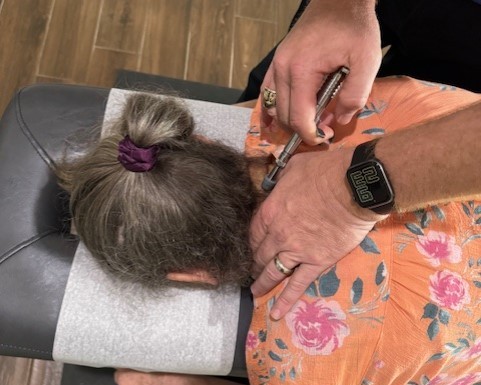
Chiropractic adjustments form the foundation of care. These gentle, specific manipulations help restore normal motion to the joints of your neck and upper back. When joints become restricted from sustained poor posture, they can create pain and inflammation. Adjustments help “unlock” these joints, reducing irritation to surrounding nerves and allowing muscles to relax. For text neck patients, we often focus on the cervical spine, but we also address the thoracic spine (mid-back) and even the shoulders, since these areas work together as an integrated system.
Soft tissue therapy addresses the muscular component of text neck. Techniques like myofascial release, trigger point therapy, and instrument-assisted soft tissue mobilization help break up adhesions, reduce muscle tension, and improve blood flow to chronically tight areas. These therapies work particularly well on the upper trapezius, levator scapulae, and suboccipital muscles that become overworked with forward head posture.
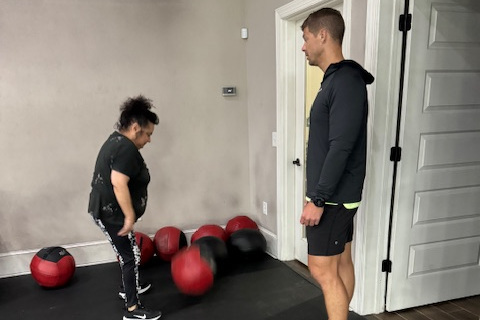
Postural correction exercises are essential for long-term success. We teach patients specific exercises to strengthen the deep cervical flexors (the front neck muscles that support proper head position) and the mid-back muscles that pull your shoulders back. Equally important are stretches for the chest muscles and the muscles at the back of the neck that have become chronically shortened. These exercises take just minutes a day but make a significant difference over time.
Ergonomic guidance helps you modify your environment and habits. We’ll discuss your workspace setup, how you hold your phone, where your computer monitor is positioned, and even how you sleep. Small changes in these daily activities can dramatically reduce the stress on your neck.
Treatment plans are individualized based on the severity of your condition, how long you’ve had symptoms, and your daily activities. Some patients experience relief within a few visits, while others with more chronic conditions may need ongoing supportive care. The beauty of chiropractic care is that it addresses the underlying biomechanical dysfunction rather than just masking symptoms.
Practical Tips to Prevent Text Neck
Prevention is always easier than treatment. These practical strategies can help protect your neck whether you’re just starting to feel discomfort or you’re working to maintain the improvements you’ve gained through chiropractic care.
Raise your devices to eye level whenever possible. Instead of looking down at your phone, bring it up so you’re looking straight ahead. This simple change eliminates much of the excessive force on your neck. Yes, your arms might get tired holding your phone up, but that’s actually a good thing — it prevents you from staying on your device for hours at a time.
Take frequent breaks using the 20-20-20 rule. Every 20 minutes, take a 20-second break and look at something 20 feet away. This gives your neck muscles a chance to rest and reset. Set a timer on your phone if you need a reminder. During these breaks, do a few neck rolls, shoulder shrugs, or simply stand up and move around.
Optimize your workspace ergonomics. Your computer monitor should be at eye level, about an arm’s length away. Your chair should support your lower back, and your feet should rest flat on the floor. If you work on a laptop, consider using an external keyboard and mouse so you can elevate the screen to the proper height.
Strengthen your neck and upper back muscles with targeted exercises. Chin tucks are particularly effective for text neck. Gently pull your chin straight back, creating a “double chin,” hold for five seconds, and repeat 10 times. This strengthens the deep cervical flexors that support proper head position. Scapular squeezes — pinching your shoulder blades together — strengthen the mid-back muscles that pull your shoulders back and prevent the rounded posture that often accompanies text neck.
Be mindful of your posture throughout the day. Set reminders on your phone to check in with yourself. Are your shoulders rounded forward? Is your head jutting out in front of your body? Simply becoming aware of these patterns is the first step toward changing them.
Limit recreational screen time when possible. This doesn’t mean giving up your smartphone, but being intentional about how much time you spend scrolling through social media or playing games on your device. Consider setting app time limits or designating certain times of day as device-free.
Sleep in a supportive position. Your pillow should keep your neck in neutral alignment — not too high or too low. Avoid sleeping on your stomach, which forces your neck to twist to one side for hours. Side or back sleeping is generally better for neck health.
When to See a Chiropractor
Many people wait until they’re in significant pain before seeking care, but early intervention typically leads to better outcomes. Here’s when you should consider making an appointment at Calhoun Spine Care and Wellness Center.
If you’re experiencing persistent neck pain that lasts more than a few days, it’s worth getting evaluated. Occasional soreness after a particularly long day on your devices is normal, but pain that lingers or returns day after day suggests a developing problem that won’t resolve on its own.
When your symptoms interfere with daily activities — making it difficult to drive, work, exercise, or sleep — professional care becomes important. You shouldn’t have to avoid activities you enjoy or struggle through your workday because of neck pain.
If you notice your posture changing — your head feeling like it’s constantly pulled forward, or your shoulders rounding despite your best efforts to sit up straight — the biomechanical changes may have progressed beyond what you can correct with awareness alone. Chiropractic care can help restore proper alignment and retrain your body’s postural habits.
Headaches that are becoming more frequent or intense, particularly if they start at the base of your skull, warrant evaluation. While many factors can cause headaches, cervicogenic headaches from neck dysfunction respond well to chiropractic treatment.
Any numbness, tingling, or weakness in your arms or hands should be addressed promptly. While these symptoms don’t always indicate a serious problem, they do suggest nerve involvement that needs professional assessment.
Red flags that require immediate medical attention include severe neck pain following trauma, fever with neck stiffness, progressive weakness, loss of bladder or bowel control, or pain that’s worsening despite rest and conservative measures. These symptoms, while rare, could indicate conditions that need urgent medical evaluation beyond chiropractic scope.
For residents of Calhoun, Georgia, and surrounding areas, addressing text neck early can prevent it from becoming a chronic condition. Regular chiropractic check-ups can also help catch postural changes before they lead to symptoms, much like visiting your dentist prevents cavities rather than just treating them after they develop.

Posture Comparison Table
| Body Position | Poor Text Neck Posture | Correct Posture |
|---|---|---|
| Head Position | Tilted forward 30-60 degrees, chin jutting out | Level with ears directly over shoulders, chin slightly tucked |
| Neck Curve | Flattened or reversed curve (military neck) | Gentle C-shaped curve (normal lordosis) |
| Shoulder Position | Rounded forward, slouched | Back and down, relaxed but not slumped |
| Device Location | Held at chest or lap level requiring downward gaze | Elevated to eye level, supporting elbows as needed |
| Muscle Engagement | Back neck muscles chronically tense, front neck muscles weak | Balanced muscle engagement with deep stabilizers active |
| Weight Distribution | 60+ pounds of force on cervical spine | 10-12 pounds (natural head weight) properly distributed |
Myths vs. Facts About Text Neck
Myth: Text neck only affects teenagers and young adults
Fact: While younger generations may have higher device usage, text neck affects people of all ages. Anyone who spends significant time looking down at phones, tablets, computers, or even books can develop this condition. Here in Calhoun, we’ve treated everyone from high school students to retirees experiencing text neck symptoms.
Myth: You have to give up your smartphone to fix text neck
Fact: You don’t need to abandon technology to protect your neck. The issue isn’t using your phone — it’s how you use it. By bringing your device to eye level, taking regular breaks, and maintaining good posture, you can use your smartphone without damaging your spine. Combined with appropriate chiropractic care and strengthening exercises, most people successfully manage text neck while still using their devices.
Myth: Text neck pain will go away on its own with rest
Fact: Unlike acute injuries that heal with time and rest, text neck is a repetitive strain condition caused by ongoing poor posture. Simply resting may provide temporary relief, but unless you address the underlying postural dysfunction and biomechanical stress, symptoms typically return or worsen. Professional evaluation and treatment, along with lifestyle modifications, are usually necessary for lasting improvement.
Myth: Chiropractic adjustments for text neck are painful
Fact: Chiropractic adjustments for text neck are generally gentle and well-tolerated by patients. While you might experience some temporary soreness similar to what you feel after starting a new exercise routine, the adjustments themselves shouldn’t be painful. Most patients at Calhoun Spine Care and Wellness Center report feeling relief and increased mobility following their adjustments.
Myth: Text neck only causes neck pain
Fact: Text neck creates a cascade of problems throughout your entire upper body. Beyond neck pain, it commonly causes upper back discomfort, shoulder tension, headaches, and even jaw pain. The forward head position affects your breathing, can contribute to fatigue, and over time may lead to degenerative changes in your cervical spine. Additionally, the rounded shoulder posture that accompanies text neck can lead to shoulder impingement and other upper extremity issues.
Final Thoughts
Text neck has become one of the most common conditions we treat at Calhoun Spine Care and Wellness Center, and it’s showing no signs of slowing down. As our lives become increasingly digital, protecting your neck and spine becomes more important than ever. The good news is that with awareness, simple postural changes, and appropriate chiropractic care, text neck is both preventable and treatable.
Remember that your body is resilient and capable of healing when given the right support. The aches and pains you’re experiencing aren’t something you have to live with forever. Whether you’re dealing with early symptoms or you’ve been struggling with chronic neck pain, there are effective, non-invasive solutions available.
If you’re in Calhoun, Georgia, or the surrounding area and you’re experiencing neck pain, headaches, or upper back discomfort that might be related to text neck, we’re here to help. At Calhoun Spine Care and Wellness Center, we take the time to understand your specific situation, identify the underlying causes of your symptoms, and create a personalized care plan that addresses your needs. Don’t wait until minor discomfort becomes a major problem. Your neck supports your head all day, every day — it deserves the care and attention necessary to keep it healthy for years to come.
Frequently Asked Questions
How long does it take to develop text neck?
Text neck can develop over weeks to months depending on how much time you spend looking down at devices and your individual susceptibility. Some people notice symptoms after just a few weeks of increased device use, while others may not experience problems for months or years. The cumulative effect of sustained poor posture is what creates the condition, so even if you don’t feel pain immediately, the stress on your spine is building over time.
Can text neck be reversed completely?
In many cases, yes, especially when caught early and addressed with appropriate care. Chiropractic treatment combined with postural exercises and ergonomic modifications can restore proper spinal alignment and resolve symptoms. However, if structural changes like significant disc degeneration or loss of cervical curve have developed over many years, complete reversal may not be possible, though symptoms can still be managed effectively and further progression can be prevented.
Is there a specific amount of phone time that’s considered safe?
There’s no magic number that applies to everyone, as individual factors like posture, neck strength, and existing spinal health all play a role. However, research suggests that spending more than two hours daily looking down at devices significantly increases your risk. More important than total time is how you use your device — maintaining proper posture and taking frequent breaks matters more than the exact minutes spent on your phone.
Will strengthening my neck muscles prevent text neck?
Strong neck muscles certainly help support proper posture and can reduce your risk of developing text neck symptoms. However, muscle strength alone won’t protect you if you’re consistently holding your head in a forward position for hours at a time. The best prevention combines strengthening exercises with postural awareness, ergonomic device use, and regular movement breaks throughout the day.
Can children develop text neck?
Yes, children and adolescents can absolutely develop text neck, and we’re seeing it at younger ages as device use increases among kids. Their developing spines may be particularly vulnerable to the effects of sustained poor posture. Parents should monitor their children’s device use, encourage breaks, teach proper posture, and watch for signs like frequent complaints of neck soreness or headaches.
Does text neck only happen from phone use, or can other activities cause it too?
Text neck is the popular term, but the condition can develop from any sustained forward head posture. Reading books in bed, working on a laptop without a stand, looking down at documents while working, crafting or sewing, and even poor sleeping positions can all contribute. The common factor is keeping your head tilted forward and down for extended periods, regardless of what specific activity you’re doing.
TL;DR – Key Takeaways
- Text neck is a repetitive strain injury caused by prolonged forward head posture while using devices, creating up to 60 pounds of force on your cervical spine instead of the normal 10-12 pounds.
- Common symptoms include neck pain, upper back tension, headaches starting at the skull base, reduced range of motion, and in advanced cases, numbness or tingling in the arms and hands.
- Chiropractic care at Calhoun Spine Care and Wellness Center offers non-surgical, drug-free treatment through spinal adjustments, soft tissue therapy, corrective exercises, and ergonomic guidance tailored to each patient.
- Prevention strategies include raising devices to eye level, taking breaks every 20 minutes, optimizing workspace ergonomics, and performing strengthening exercises like chin tucks and scapular squeezes.
- Early intervention leads to better outcomes — if neck pain persists beyond a few days or interferes with daily activities, seeking professional evaluation from a chiropractor in Calhoun, Georgia is recommended rather than waiting for symptoms to worsen.