
Sciatica Relief in Calhoun, GA: Causes, Symptoms, and Chiropractic Care
Sciatica can stop you in your tracks. If you’ve felt sharp, burning, or electric pain that travels from your lower back or hip down the back of your leg, you know how disruptive it can be. At Calhoun Spine Care & Wellness Center, we help people across Calhoun understand what’s going on, calm irritation, and get moving again safely. In this guide, we’ll explain sciatica in plain language, outline common causes and symptoms, and share how evidence-informed chiropractic care may fit into a conservative plan for relief.
My goal is to reduce worry, give you clear next steps, and help you feel confident about your options here in Calhoun.
What you’ll learn:
- Exactly what sciatica is
- What typically causes it
- Which symptoms matter
- How chiropractic care may help
- Practical things you can do at home
- When to seek professional or urgent care
Sciatica is a general term for pain, tingling, numbness, or weakness caused by irritation of the sciatic nerve or its roots. It most often affects one side of the body and can range from mild to severe.
Table of Contents
- What Is Sciatica?
- What Causes Sciatica?
- Signs and Symptoms
- How Chiropractic Care Fits In (Calhoun, GA)
- Practical Relief Tips You Can Start Today
- When to See a Chiropractor
- When to Seek Medical Care Urgently
- Myths vs Facts
- Final Thoughts for Our Calhoun Community
What Is Sciatica?
The sciatic nerve is the longest nerve in your body. It begins as several nerve roots exiting the lower spine, bundles in the pelvis, and travels through the buttock and down the back of the leg.
When one or more of those nerve roots are compressed or irritated, you may feel pain along the nerve’s pathway. People often describe it as shooting, burning, or electric. Sometimes it’s a deep ache. You might notice pins-and-needles, numb patches, or weakness in the leg or foot.
While the term “sciatica” sounds scary, most cases improve with time and conservative care. Understanding the “why” behind your symptoms is the first step toward lasting relief.
What Causes Sciatica?
Sciatica is a symptom, not a diagnosis by itself. The underlying cause can vary, and your plan should match what’s actually happening. Common culprits include:
Disc irritation or herniation
Spinal discs act as cushions between the vertebrae. If part of a disc bulges or herniates, it can irritate a nearby nerve root. This is a frequent cause of sciatica, especially if symptoms started after lifting, twisting, or an awkward movement.
Spinal stenosis
Stenosis means narrowing. Age-related changes can narrow the spaces where nerves travel, creating nerve irritation—often worse with standing or walking and relieved by sitting or bending forward.
Spondylolisthesis and joint dysfunction
When one vertebra slips slightly over another (spondylolisthesis), or when the facet joints become inflamed or restricted, nearby nerves can become irritated. This can produce sciatic-type pain patterns.
Muscle and soft tissue factors
Tight or irritated hip and pelvic muscles can add to nerve sensitivity. The piriformis muscle in the buttock is sometimes involved, though true “piriformis syndrome” is less common than many think. Soft tissue tension can still amplify nerve symptoms.
Posture, repetitive strain, and ergonomics
Hours of slumped sitting, heavy or frequent lifting with poor mechanics, or a sudden spike in activity can overload tissues. Over time, this can set the stage for nerve irritation.
Pregnancy and lifestyle factors
During pregnancy, posture changes and ligament laxity can shift loads in the pelvis and lower back. Weight changes, deconditioning, and smoking history can also influence tissue health and recovery timelines.
Because the causes vary, a careful evaluation is important. The right plan should match your specific pattern—not just the label “sciatica.”
Signs and Symptoms
Most people with sciatica feel pain radiating from the lower back or buttock down the back of one thigh, sometimes reaching the calf or foot. It might feel sharp, burning, or like an electric jolt. Some describe a deep toothache-like ache in the leg.
Numbness or tingling can occur in defined areas of the leg or foot, depending on which nerve root is irritated. You might notice weakness, such as difficulty lifting the foot, pushing off the toes, or standing up from a chair.
Aggravating factors often include sitting for long periods, coughing or sneezing, bending forward, or lifting. Some people feel better walking and worse sitting, while others are the opposite—your pattern gives clues about the root cause.
The good news: most cases respond well to patient-specific, conservative care. The key is to reduce nerve irritation, restore movement, and build resilience at a comfortable pace.
How Chiropractic Care Fits In (Calhoun, GA)
Chiropractic care is a conservative, non-drug approach that focuses on the spine, joints, muscles, and nervous system. For many patients with sciatica, chiropractic can be a helpful part of a broader plan that also includes activity modification and targeted exercises.
What we do at Calhoun Spine Care & Wellness Center
We start with a thorough history and exam. We’ll discuss when your pain started, what makes it better or worse, and any past injuries. We’ll check your mobility, nerve function, and movement patterns. If any red flags are present, we coordinate appropriate medical referral first.
Care plans are individualized. Depending on your findings, options may include:
- Gentle spinal manipulation or mobilization: Specific, controlled techniques to improve joint motion in the lower back or pelvis. For some people, this can help reduce pain and improve function when used appropriately.
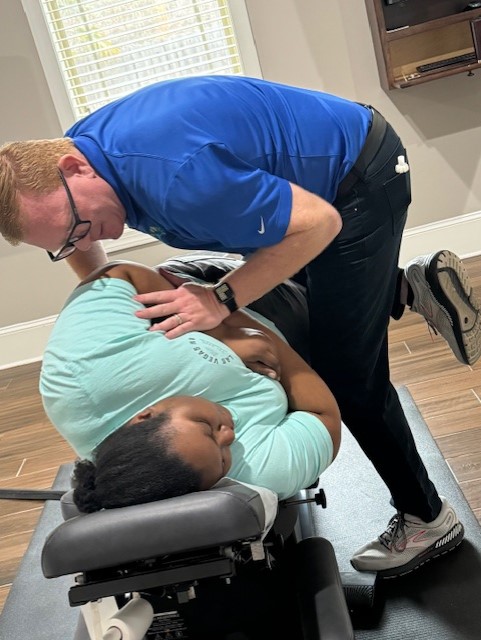
- Flexion-distraction and decompressive techniques: Cushioning the spine over a specialized table to gently open spaces where nerves exit, often soothing irritation from disc-related pain.
- Soft-tissue therapy: Addressing tight or overactive muscles and fascia around the hips, glutes, and lower back to reduce guarding and improve mechanics.
- Nerve glide education and directional exercises: Carefully dosed movements that help nerves move freely and reduce sensitivity over time. We emphasize gentle progressions based on your tolerance.
- Activity and ergonomic coaching: Simple changes to sitting, lifting, walking, and sleeping that take pressure off irritated tissues and help prevent flare-ups.
What the evidence says
Guidelines from respected organizations support spinal manipulation and other non-pharmacologic options as part of conservative care for low back pain, and some individuals with sciatica may benefit from these approaches as well:
- The American College of Physicians includes spinal manipulation among recommended non-drug options for acute, subacute, and chronic low back pain. Outcomes vary by individual, and care should be tailored to your presentation. (See ACP Clinical Practice Guideline, Annals of Internal Medicine, 2017.)
- NICE (UK) guidance on low back pain and sciatica supports manual therapy only as part of a treatment package that includes exercise. This aligns with our approach of combining hands-on care with movement and self-management. (NICE NG59, updated 2020.)
- The National Center for Complementary and Integrative Health summarizes evidence that spinal manipulation can be helpful for some types of low back pain when performed by trained professionals. Individual responses differ.
We keep expectations realistic and focus on steady, meaningful progress: calmer nerves, better motion, and a return to daily activities with confidence.
Practical Relief Tips You Can Start Today
- Keep gentle movement in your day. Short walks, changing positions every 30–45 minutes, and avoiding long periods of sitting can reduce stiffness and nerve irritation.
- Find your “comfortable direction.” If bending forward eases your leg pain, favor that position briefly during the day. If gently arching backward helps, use small, pain-free repetitions. Stop anything that worsens your leg symptoms.
- Use heat or ice based on preference. Heat can relax muscle tension; ice may calm sharp irritation. Limit to 10–15 minutes, and protect your skin.
- Sleep smart. Try side-lying with a pillow between your knees, or on your back with a small pillow under the knees to reduce tension on the lower back.
- Hip-hinge when lifting. Keep the load close, spine neutral, and let your hips do the work. Avoid twisting while carrying.
- Optimize your workstation. Sit with your hips slightly higher than your knees, feet flat, and the screen at eye level. A small lumbar support can help you avoid slumping.
When to See a Chiropractor
If your leg pain has been present for more than a few days and is affecting your daily life, a chiropractic evaluation is reasonable. Early guidance can shorten recovery and reduce the chance of recurring flare-ups.
Consider scheduling if:
- The pain travels below your buttock into the thigh, calf, or foot. Radiating pain suggests nerve involvement and benefits from a targeted plan.
- Sitting, lifting, or driving consistently aggravates your symptoms. We can help identify positions and movements that calm your symptoms while you stay active.
- Self-care hasn’t changed your symptoms after 1–2 weeks. When things aren’t improving, a closer look helps ensure you’re on the right track.
During your visit, we’ll rule out red flags, identify likely sources, and discuss a step-by-step approach that matches your goals and comfort level.
When to Seek Medical Care Urgently
Most sciatica isn’t an emergency. However, some symptoms need prompt medical attention:
- New or worsening bowel or bladder control problems
- Severe or progressive leg weakness (foot drop, difficulty standing on toes or heels)
- Numbness in the groin or saddle area
- Fever, chills, or unexplained weight loss with back/leg pain
- Significant trauma (fall, car accident), or a history of cancer, osteoporosis, or long-term steroid use
If any of these apply, seek urgent medical evaluation. We regularly coordinate with local medical providers when imaging, medications, or other interventions are warranted.
Myths vs Facts
| Myth | Fact |
|---|---|
| “Sciatica means I need surgery.” | Most cases improve with conservative care. Surgery is reserved for specific situations, such as severe or progressive deficits or persistent, disabling pain that fails conservative measures. |
| “Bed rest is the fastest way to heal.” | Prolonged bed rest often slows recovery. Gentle movement, paced activity, and guided exercise are typically more helpful. |
| “If it hurts, I should avoid all exercise.” | Well-chosen, symptom-guided movements can reduce nerve irritation and speed recovery. The key is the right exercise, not zero exercise. |
| “Chiropractic is just for ‘cracking backs.’” | Evidence-informed chiropractic care includes assessment, manual therapy, exercise guidance, ergonomic coaching, and coordination with other providers when needed. |
| “Pain down both legs always means permanent damage.” | Bilateral symptoms can occur for several reasons. Many improve with appropriate care, but they should be evaluated promptly. |
Final Thoughts for Our Calhoun Community
Sciatica is common and, understandably, frustrating. With a clear plan, most people improve without invasive procedures. If you’re in Calhoun, we’re here to listen, assess carefully, and guide you with a calm, step-by-step approach that fits your life and goals.
Whether you’re a parent juggling carpools, a student commuting to campus, or working long shifts on your feet, we love helping our neighbors stay active and comfortable. If questions come up, the team at Calhoun Spine Care & Wellness Center is ready to help you make informed choices.
FAQs
What causes sciatica?
Common causes include lumbar disc herniation, age-related spinal stenosis, joint dysfunction, and soft tissue irritation around the hip and pelvis. An exam helps identify your specific pattern.
How long does sciatica take to heal?
Many cases improve within a few weeks with conservative care. Timelines vary based on the cause, your general health, and how consistently you follow a guided plan.
Can chiropractic help sciatica?
Chiropractic care may help reduce pain and improve function for some people, especially as part of a plan that includes exercise and activity modification. Results vary by individual.
Do I need an MRI for sciatica?
Not usually at first. Imaging may be considered if red flags are present or if symptoms persist despite appropriate conservative care.
Is it safe to exercise with sciatica?
Yes, when guided properly. Gentle, well-tolerated movements that do not worsen leg pain can support recovery. Stop anything that increases radiating symptoms.
Which sleeping position is best?
Side-lying with a pillow between the knees or on your back with a pillow under the knees often reduces strain. Choose what feels best and keeps symptoms calm.
TL;DR
- Sciatica is nerve-related leg pain, usually from irritation of lower spinal nerve roots.
- Common causes include disc issues, spinal stenosis, and joint or soft tissue irritation.
- Conservative care—including chiropractic, movement, and ergonomic changes—helps many people.
- Seek urgent medical care for red flags like bowel/bladder changes or progressive weakness.
- In Calhoun, we provide individualized plans to calm symptoms, restore motion, and build confidence.
Resources for further reading:
- American College of Physicians Clinical Practice Guideline (Ann Intern Med, 2017)
- NICE Guideline NG59: Low back pain and sciatica
- National Center for Complementary and Integrative Health: Spinal Manipulation