
If you’ve ever stood up too quickly and felt the room spinning around you, you know just how unsettling that sensation can be. For many people, though, vertigo isn’t a one-time event — it’s a recurring problem that interferes with daily life, making it difficult to drive, work, or even walk across a room safely. Here in Calhoun, GA, patients regularly visit Calhoun Spine Care and Wellness Center wondering what causes vertigo and whether there’s anything they can do about it beyond waiting for it to pass. The good news is that vertigo is often very treatable, especially when the root cause is identified and addressed properly.
What is vertigo?
Vertigo is the sensation that you or your surroundings are spinning or moving when neither actually is. It is not simply feeling dizzy or lightheaded — it is a distinct, often disorienting experience that can range from mild to severely debilitating. Vertigo is a symptom, not a condition in itself, which means understanding its underlying cause is essential to finding real, lasting relief.
Understanding Vertigo: More Than Just Dizziness
People often use the words “dizzy” and “vertigo” interchangeably, but they describe two different experiences. Dizziness is a broad term that can mean feeling faint, unsteady, or lightheaded. Vertigo specifically refers to that false sense of spinning or rotational movement. Patients often describe it as feeling like they just stepped off a merry-go-round, even when they’ve been perfectly still.
Vertigo can last anywhere from a few seconds to several hours, and in some cases, episodes can return repeatedly over days or weeks. It may be accompanied by nausea, vomiting, sweating, or difficulty keeping your balance. For some people, it’s triggered by simple movements — turning over in bed, tilting the head back to look up at a shelf, or bending down to tie a shoe. For others, it seems to come on without any clear trigger at all.
Understanding what vertigo is helps us realize that treating the symptom alone isn’t enough. The key is getting to the source of the problem — which is exactly what Dr. Blake Derrick and the team at Calhoun Spine Care and Wellness Center focus on with every patient.
What Causes Vertigo? Common and Lesser-Known Triggers
So, what causes vertigo exactly? The answer depends on where the problem originates. Vertigo is typically classified as either peripheral or central, based on whether the issue stems from the inner ear or the brain and nervous system, respectively. The vast majority of vertigo cases fall into the peripheral category.
Benign Paroxysmal Positional Vertigo (BPPV)
BPPV is the single most common cause of vertigo. It occurs when tiny calcium carbonate crystals, called otoliths or “ear rocks,” become dislodged from their normal position in the inner ear and migrate into one of the semicircular canals. When this happens, even small head movements can send incorrect signals to the brain about the body’s position in space, triggering that spinning sensation. BPPV episodes are often brief but can be startling and repetitive.
Cervicogenic Vertigo (Neck-Related Dizziness)
This is one of the causes of vertigo that many people don’t hear about, but it’s highly relevant in a chiropractic setting. The cervical spine — the upper portion of your neck — plays a crucial role in helping your body maintain balance and spatial awareness. Specialized receptors in the joints and muscles of the neck send constant signals to the brain about head position. When the neck is misaligned, injured, or chronically tense, those signals can become distorted, contributing to dizziness and vertigo-like symptoms.
Patients who have experienced whiplash from an auto accident, for instance, sometimes develop vertigo as a secondary symptom. If you’ve recently been in a collision and are now dealing with dizziness, our whiplash treatment services may be a valuable starting point for your recovery. Similarly, ongoing neck pain from poor posture or spinal dysfunction can contribute to this type of dizziness over time.
Vestibular Neuritis and Labyrinthitis
These conditions involve inflammation of the inner ear or the nerve that connects it to the brain, usually following a viral infection. Vestibular neuritis typically causes sudden, severe vertigo that may last for days, while labyrinthitis can also involve hearing changes or ringing in the ears (tinnitus). These conditions often resolve on their own, but the recovery process can be supported with vestibular rehabilitation exercises.
Menière’s Disease
Menière’s disease is a disorder of the inner ear characterized by episodes of vertigo, hearing loss, tinnitus, and a feeling of fullness in the ear. It’s believed to be related to abnormal fluid accumulation in the inner ear. Episodes can vary widely in frequency and severity, and the condition requires ongoing management strategies.
Central Causes of Vertigo
Less commonly, vertigo can originate from the central nervous system — particularly the brainstem or cerebellum. Conditions like migraines (vestibular migraine is increasingly recognized), multiple sclerosis, or in rare cases, stroke, can produce vertigo as a symptom. Central vertigo tends to be more persistent and may come with other neurological signs. If you experience sudden, severe vertigo accompanied by difficulty speaking, weakness on one side of the body, or vision changes, seek emergency care immediately.
Recognizing the Signs and Symptoms of Vertigo
Beyond the hallmark spinning sensation, vertigo often presents with a cluster of accompanying symptoms that can help identify the underlying cause. Nausea and vomiting are common, particularly during more intense episodes. Many people also notice abnormal eye movements called nystagmus — a rhythmic, involuntary flickering of the eyes that can actually help a trained clinician pinpoint the type of vertigo you’re experiencing.
Difficulty walking in a straight line, a tendency to veer to one side, and a general sense of imbalance are also frequently reported. Some patients describe a “heavy head” feeling or notice that their symptoms worsen when they change positions — lying down, rolling over in bed, or tilting the head back. Headaches sometimes accompany vertigo, and it’s worth noting that people dealing with chronic headaches and migraines are at a higher risk of also experiencing vestibular symptoms.
Keeping a symptom journal can be incredibly useful. Note when episodes occur, how long they last, what you were doing when they started, and whether anything makes them better or worse. This information helps Dr. Blake Derrick build a clearer picture of what’s driving your symptoms.

How Chiropractic Care Can Help with Vertigo
Chiropractic care offers a drug-free, non-invasive approach to addressing certain types of vertigo, particularly those with a musculoskeletal or neurological component. At Calhoun Spine Care and Wellness Center, Dr. Blake Derrick begins with a thorough evaluation to understand the specific nature of your vertigo before recommending any course of care.
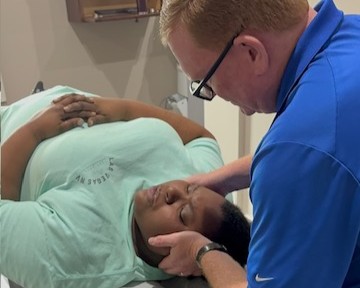
For BPPV specifically, one of the most effective treatments is a repositioning maneuver called the Epley maneuver. This technique involves guiding the patient through a series of precise head and body movements designed to move the displaced crystals in the inner ear back to their proper location. Evidence from multiple clinical reviews, including guidance from established organizations like the American Academy of Neurology, supports the Epley maneuver as a first-line treatment for BPPV. Many patients experience significant relief within one to three sessions.
For cervicogenic vertigo — dizziness rooted in the cervical spine — chiropractic adjustments to the neck may help restore proper joint movement and reduce the abnormal nerve signaling that contributes to dizziness. Spinal misalignments in the upper cervical region can impair communication between the neck and brain, and gentle, targeted adjustments aim to correct this. Our approach to vertigo treatment at Calhoun Spine Care is individualized, which means no two care plans look exactly alike.
In many cases, chiropractic care is combined with therapeutic exercise and rehabilitation strategies. Our physical therapy services complement spinal care beautifully, particularly when vestibular rehabilitation exercises are integrated into the plan. These exercises help the brain recalibrate its balance systems and can significantly reduce the frequency and intensity of vertigo episodes over time.
It’s also worth noting that supporting overall spinal health tends to benefit the nervous system broadly. Patients who come in for wellness chiropractic care often report improvements in balance, coordination, and general well-being — benefits that extend well beyond the specific symptoms they initially came in to address.
Practical Tips for Managing Vertigo Day to Day
While professional care is important, there are also sensible steps you can take at home to reduce your risk of triggering episodes and support your recovery.
Moving slowly and deliberately when changing positions is one of the most effective strategies. When getting out of bed, sit up first and pause for a moment before standing. Avoid rapid head movements, and be cautious on stairs or uneven surfaces where a moment of imbalance could lead to a fall. Good lighting throughout your home — particularly at night — is a simple but important safety measure.
Staying well hydrated supports inner ear function and general neurological health. Reducing sodium intake may be beneficial for those with Menière’s disease, as excess fluid in the inner ear is a contributing factor. Caffeine and alcohol can also aggravate inner ear conditions for some individuals, so moderating consumption is worth considering.
Posture plays a meaningful role as well. Many of us spend hours each day looking down at phones or hunching over laptops, which places strain on the cervical spine. This kind of prolonged forward head posture can contribute to neck dysfunction that, over time, may worsen vestibular symptoms. Learning more about how text neck affects the neck and spine is a great first step toward making smarter daily habits.
Gentle, consistent movement is generally encouraged. Activities like walking, yoga, or tai chi can help train the body’s balance systems and reduce the likelihood of vertigo episodes. However, always check with Dr. Blake Derrick before starting any new exercise program while actively experiencing vertigo, as certain movements may need to be modified.
When to See a Chiropractor for Vertigo
If you are experiencing recurring episodes of vertigo — especially if they are positional in nature or accompanied by neck pain or stiffness — a chiropractic evaluation is a smart, conservative first step. Vertigo that follows a car accident, sports injury, or other physical trauma also warrants prompt assessment, since the underlying spinal issue may be driving the symptom. Our team has experience helping patients recovering from auto injury situations where vertigo emerged as part of a broader pattern of injury.
You should also consider chiropractic care if you’ve tried other approaches without lasting success, if your vertigo is affecting your quality of life, or if you simply want a thorough, drug-free evaluation of what may be contributing to your symptoms.
There are, however, situations that require immediate medical attention. Seek emergency care if your vertigo is sudden and severe, if it is accompanied by chest pain, difficulty speaking, facial drooping, double vision, or weakness on one side of the body. These could be signs of a stroke or other serious neurological event. A chiropractor will always refer patients appropriately when symptoms suggest something beyond the scope of conservative care.
|
Type of Vertigo |
Common Cause |
Key Features |
Conservative Care Options |
|---|---|---|---|
|
BPPV |
Displaced inner ear crystals |
Brief episodes triggered by position changes |
Epley maneuver, vestibular rehab |
|
Cervicogenic Vertigo |
Cervical spine dysfunction |
Associated with neck pain or stiffness |
Chiropractic adjustments, physical therapy |
|
Vestibular Neuritis |
Inner ear inflammation (viral) |
Sudden onset, no hearing changes |
Vestibular rehab, rest, hydration |
|
Menière’s Disease |
Inner ear fluid imbalance |
Hearing loss, tinnitus, fullness in ear |
Dietary modifications, medical management |
|
Vestibular Migraine |
Migraine-related neurological changes |
Episodes linked to migraine history |
Headache management, lifestyle changes |
Myths vs. Facts About Vertigo
Myth: Vertigo is just another word for being afraid of heights.
Fact: This is one of the most persistent misconceptions about vertigo. Fear of heights is called acrophobia. Vertigo is a physical symptom — a sensation of spinning or movement — that can occur in any setting, not just at heights. It is rooted in dysfunction of the balance systems in the inner ear or nervous system.
Myth: Vertigo always goes away on its own, so there’s no point in treating it.
Fact: While some isolated episodes of vertigo do resolve without treatment, recurring vertigo often has an identifiable cause that can and should be addressed. Leaving certain types of vertigo untreated can lead to fall risk, reduced quality of life, and worsening symptoms over time. Treatment options like the Epley maneuver have strong evidence behind them and can provide relief quickly.
Myth: Chiropractors can’t help with vertigo.
Fact: Chiropractic care has a well-established role in managing vertigo — particularly BPPV and cervicogenic dizziness. Dr. Blake Derrick is trained to assess and perform repositioning maneuvers, and the cervical spine adjustments offered at Calhoun Spine Care and Wellness Center can address neck-related contributions to dizziness.
Myth: Vertigo only affects older people.
Fact: While BPPV does become more common with age, vertigo can affect people of all ages. Younger adults who experience head injuries, inner ear infections, or chronic neck tension may be just as susceptible. Even athletes who sustain head or neck trauma can develop vertigo — something worth considering for those seeking sports chiropractic care.
Myth: If your doctor hasn’t found anything wrong, your vertigo must be psychological.
Fact: Vertigo is a real, physical experience. Because it doesn’t always show up on standard imaging or basic screenings, some patients are left without a clear diagnosis. A functional assessment of the vestibular system, cervical spine, and nervous system — as Dr. Blake Derrick performs — can uncover causes that routine exams may miss.
Final Thoughts from Calhoun Spine Care and Wellness Center
Vertigo can feel frightening and isolating, especially when you don’t have a clear explanation for why it keeps happening. But you don’t have to keep managing it on your own. Understanding what causes vertigo is the first step toward finding real relief — and having a trusted care team in your corner makes all the difference.
At Calhoun Spine Care and Wellness Center, Dr. Blake Derrick approaches every patient as an individual. He takes the time to listen, evaluate thoroughly, and build a care plan that targets the actual source of your symptoms rather than just masking them. Whether your vertigo is related to a misalignment in your cervical spine, displaced inner ear crystals, or something that needs a collaborative approach with other healthcare providers, you can count on honest, thoughtful guidance here in Calhoun, GA.
Our community deserves to feel balanced, steady, and well — and we’re here to help make that happen. If vertigo has been holding you back, consider reaching out to Calhoun Spine Care and Wellness Center for an evaluation. You might be closer to relief than you think.
Frequently Asked Questions About Vertigo
Can a chiropractor treat vertigo?
Yes, chiropractors can play an important role in treating certain types of vertigo, especially BPPV and cervicogenic dizziness. Repositioning maneuvers like the Epley maneuver and cervical spine adjustments are among the evidence-informed tools chiropractors use. A proper evaluation helps determine whether chiropractic care is the right fit for your specific situation.
How do I know if my vertigo is from my neck or my inner ear?
A trained clinician can often distinguish between the two through a combination of history, positional testing, and observation of eye movements. Cervicogenic vertigo is typically associated with neck pain or stiffness and worsens with neck movements, while BPPV is usually triggered by specific head positions. A thorough evaluation at Calhoun Spine Care and Wellness Center can help clarify the source.
How long does vertigo usually last?
This depends heavily on the underlying cause. BPPV episodes themselves often last less than a minute, though they can recur throughout the day. Vestibular neuritis may cause continuous dizziness for days to weeks. With appropriate treatment, many people experience significant improvement relatively quickly — sometimes within just a few visits.
Is it safe to drive if I have vertigo?
It is generally not recommended to drive during active vertigo episodes, as your reaction time and spatial awareness may be impaired. If you are experiencing frequent or unpredictable episodes, discuss driving safety with your chiropractor or primary care provider until the condition is under better control.
Can poor posture contribute to vertigo?
Yes, particularly if poor posture is causing chronic dysfunction in the cervical spine. Prolonged forward head posture — common among people who spend long hours on phones or computers — can strain the muscles and joints of the neck, potentially contributing to cervicogenic dizziness. Correcting posture as part of a broader care plan may help reduce these symptoms over time.
What is the Epley maneuver and does it really work?
The Epley maneuver is a sequence of guided head and body movements designed to reposition displaced calcium crystals in the inner ear that cause BPPV. It has strong support in the clinical literature and is widely recommended as a first-line intervention. Many patients experience noticeable relief after just one or a few sessions.
TL;DR
-
Vertigo is a spinning sensation caused by dysfunction in the inner ear, cervical spine, or central nervous system — not simply dizziness.
-
The most common cause is BPPV, where displaced inner ear crystals send incorrect balance signals to the brain; neck dysfunction is another frequently overlooked trigger.
-
Chiropractic care, including repositioning maneuvers and cervical adjustments, offers a drug-free, evidence-informed approach to certain types of vertigo.
-
Daily habits like moving slowly when changing positions, staying hydrated, and improving posture can help reduce vertigo episodes between visits.
-
Sudden, severe vertigo with neurological symptoms is a medical emergency — always seek immediate care if those signs are present.