

Whiplash is one of those injuries that catches people completely off guard. One moment you’re going about your day, and the next — whether from a rear-end collision, a sports impact, or an unexpected fall — your neck has been forced through a violent back-and-forth motion that your body simply wasn’t prepared for. If you’ve recently experienced this kind of trauma and you’re dealing with neck pain, stiffness, or headaches, you are not alone. Here in Calhoun, GA, patients come through the doors of Calhoun Spine Care and Wellness Center every week looking for answers and relief after whiplash injuries. The good news is that chiropractic care has a well-established role in helping people recover, rehabilitate, and get back to living their lives.
What Is Whiplash?
Whiplash is a soft tissue injury to the neck caused by a rapid, forceful back-and-forth movement of the head — similar to the cracking of a whip. It most commonly affects the muscles, ligaments, tendons, and joints of the cervical spine (the neck). It is not always immediately painful, which is why many people are surprised when symptoms develop hours or even days after an incident.
Understanding Whiplash and How It Affects Your Body
The cervical spine is an engineering marvel — seven small vertebrae supporting the weight of your head while allowing an impressive range of motion. But that same flexibility makes it vulnerable when subjected to sudden, unexpected forces. During a whiplash event, the head is thrown forward and then snapped backward (or vice versa) faster than the muscles can react. This places enormous stress on the joints, discs, and soft tissues of the neck.
What makes whiplash particularly tricky is that it doesn’t always involve a single, obvious injury. Instead, it often creates a constellation of micro-traumas — small tears in muscle fibers, overstretched ligaments, irritated facet joints, and, in some cases, subtle misalignments in the vertebrae themselves. These are often called cervical subluxations, and they can interfere with the normal movement and function of the spine. Left unaddressed, they can lead to chronic stiffness, recurring headaches, and ongoing discomfort.
The nervous system is also involved. The spine houses and protects your spinal cord, and when vertebrae are misaligned or surrounding tissues are inflamed, nerve irritation can follow. This is why some whiplash patients experience symptoms that go beyond neck pain — things like dizziness, jaw tightness, difficulty concentrating, or even tingling into the arms. Understanding this complexity is exactly why a thorough evaluation from a trained professional like Dr. Blake Derrick at Calhoun Spine Care and Wellness Center is so important.

Common Causes and Symptoms of Whiplash
Motor vehicle accidents — especially rear-end collisions — are the most well-known cause of whiplash injuries. However, the same type of cervical trauma can happen in a number of other situations. Contact sports like football, hockey, and wrestling can produce rapid neck movements. Rollercoaster rides, horseback riding, and even physical altercations can cause the same mechanism. Any sudden, forceful movement of the head can place the cervical spine under whiplash-type stress.
One of the most important things to understand about whiplash is that symptom onset is often delayed. Many people walk away from a car accident feeling relatively fine, only to wake up the next morning with a stiff, painful neck. This delay happens because adrenaline and inflammation both take time to work through the body’s systems. By the time the full picture develops, the injury has already set in.
Common symptoms of whiplash include neck pain and stiffness, reduced range of motion in the neck, headaches that often begin at the base of the skull, shoulder pain or tightness, upper back discomfort, and fatigue. Some individuals also experience what is sometimes called “whiplash-associated disorder,” which can include cognitive difficulties, irritability, sleep disturbances, and dizziness. If you’re experiencing any combination of these symptoms after a traumatic incident, it’s worth getting evaluated — even if the initial impact seemed minor.
How Chiropractic Care Fits Into Whiplash Recovery
Chiropractic care is one of the most well-studied conservative approaches for whiplash injuries. Research published in peer-reviewed journals, including work referenced by organizations like the National Institutes of Health and the Cochrane Library, suggests that spinal manipulation and mobilization can be effective tools for reducing pain and restoring function in patients with cervical injuries from whiplash. It is a non-surgical, drug-free approach that focuses on correcting the underlying mechanical dysfunction — not just masking the pain.
When a chiropractor evaluates a whiplash patient, the goal is to identify which specific structures have been affected and develop a care plan tailored to that individual. This is not a one-size-fits-all situation. Some patients have primarily muscular involvement. Others may have joint restrictions, disc irritation, or nerve involvement. A qualified chiropractor will assess all of these factors before recommending any hands-on treatment.
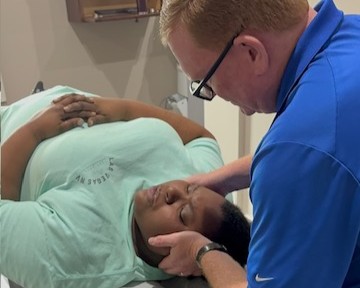
Chiropractic adjustments — also called spinal manipulations — involve applying a controlled, targeted force to specific joints of the spine to restore proper alignment and motion. For whiplash patients, these adjustments are often gentler and more carefully applied than for routine back or neck pain, especially in the acute phase right after injury. Alongside adjustments, chiropractors may incorporate soft tissue therapies, therapeutic exercises, and postural rehabilitation to address all layers of the injury. Evidence indicates that this multi-faceted approach often produces better outcomes than any single treatment alone.
What to Expect at Calhoun Spine Care and Wellness Center
At Calhoun Spine Care and Wellness Center, Dr. Blake Derrick takes a thorough, patient-centered approach to whiplash care. The first visit begins with a detailed consultation, where Dr. Derrick will ask about the mechanism of your injury, the timeline of your symptoms, and your overall health history. From there, a physical and neurological examination helps identify areas of restriction, tenderness, and dysfunction.
In some cases, imaging such as X-rays may be recommended to get a clearer picture of the cervical spine and rule out fractures or other structural concerns. Once a clear understanding of your condition is established, Dr. Blake Derrick will explain what was found, what it means for your recovery, and what a realistic care plan looks like. You will never be left wondering what’s happening or why — education is a core part of the care process at Calhoun Spine Care and Wellness Center.
Care plans are built around the individual, not a template. Early-phase care might focus on reducing inflammation and gentle mobilization. As the acute phase resolves, treatment may progress to more specific adjustments, targeted rehabilitation exercises, and strategies to prevent the injury from becoming a chronic problem. The team at Calhoun Spine Care and Wellness Center is committed to walking with patients through every stage of recovery right here in Calhoun, GA.
Practical Tips to Support Your Recovery at Home
Chiropractic care is most effective when patients are active participants in their own recovery. What you do between appointments matters. During the early stages of a whiplash injury, the most important thing is to avoid aggravating activities — but also to avoid complete immobilization. Prolonged use of a cervical collar or staying completely still has actually been shown in research to slow recovery compared to gentle, guided movement.
Gentle range-of-motion exercises — slow, deliberate head nods and side-to-side turns — can help maintain mobility and prevent the muscles from tightening further. These should never be forced or cause sharp pain. If Dr. Blake Derrick prescribes specific home exercises during your care at Calhoun Spine Care and Wellness Center, following through with those consistently will make a real difference in your recovery timeline.
Sleeping position also matters more than most people realize. Sleeping on your stomach with your head twisted to one side puts significant stress on the cervical spine. Side or back sleeping with a supportive pillow that keeps your head in neutral alignment is far more conducive to healing. Applying ice to sore areas for 15-20 minutes in the acute phase can help manage inflammation, and heat may become more useful as the injury progresses into the subacute phase. Always follow the specific guidance of your care provider for these decisions.

When to See a Chiropractor After a Whiplash Injury
One of the most common questions people ask is how soon they should seek care after a whiplash injury. The answer is: as soon as reasonably possible. Early evaluation and treatment are associated with better outcomes. Waiting weeks or months while hoping symptoms resolve on their own can allow muscle guarding, joint stiffness, and compensatory movement patterns to develop — all of which make rehabilitation more complex.
That said, it’s important to recognize certain red flags that require immediate medical attention rather than a chiropractic visit as the first step. If you experience severe neurological symptoms such as significant weakness or numbness in the arms or legs, loss of bladder or bowel control, severe and unrelenting headache, difficulty swallowing, or any signs of a head injury, please go to an emergency room first. These symptoms may indicate a more serious injury that needs urgent evaluation.
For the vast majority of whiplash presentations — neck stiffness, localized pain, headaches, shoulder tension — chiropractic care is an appropriate and effective first-line conservative treatment. If you’ve been in an accident or experienced a traumatic neck injury and you’re looking for care near Calhoun, GA, don’t wait too long to get evaluated.
Whiplash Symptoms vs. Common Triggers
|
Symptom |
Likely Contributing Factor |
Chiropractic Relevance |
|---|---|---|
|
Neck pain and stiffness |
Joint restriction, muscle guarding, soft tissue injury |
Spinal adjustment and mobilization directly address joint dysfunction |
|
Headaches at the base of skull |
Upper cervical joint irritation, muscle tension |
Cervical adjustments and soft tissue work may reduce frequency and intensity |
|
Referred muscle tension, postural compensation |
Rehabilitation and postural correction help reduce compensatory strain |
|
|
Dizziness or balance issues |
Inner ear disruption, upper cervical joint involvement |
Upper cervical care may support improvement; referral considered if severe |
|
Arm tingling or numbness |
Nerve irritation from disc or joint involvement |
Neurological evaluation guides whether chiropractic care is appropriate |
|
Jaw pain or tightness |
TMJ stress from the whiplash mechanism |
May be co-managed with chiropractic care alongside appropriate referral |
Myths vs. Facts About Whiplash and Chiropractic Care
Myth: Whiplash isn’t a real injury if it happened at low speed.
Fact: The severity of a whiplash injury is not always proportional to the speed of impact. Low-speed collisions can still generate enough force to cause significant soft tissue and joint damage, particularly when the occupant is not braced for impact. Many patients with serious whiplash injuries were involved in what appeared to be minor accidents.
Myth: You should rest completely and avoid all movement after whiplash.
Fact: Research suggests that early, gentle movement is generally more beneficial for recovery than complete immobilization. Extended rest and prolonged collar use have been associated with slower recovery in many cases. A guided return to movement, under the supervision of a provider like Dr. Blake Derrick, is typically the more effective approach.
Myth: Chiropractic adjustments are dangerous for whiplash patients.
Fact: When performed by a trained, licensed chiropractor who has conducted a thorough evaluation, chiropractic care for whiplash is considered safe and appropriate for most patients. Care is adapted to the individual’s presentation — acute whiplash patients receive gentler, more measured treatment, not aggressive manipulation.
Myth: Whiplash always resolves on its own within a few weeks.
Fact: While some patients do recover relatively quickly, a meaningful portion of whiplash patients develop chronic symptoms that persist for months or even years when left untreated. Early, appropriate care — including chiropractic evaluation and rehabilitation — has been shown to help reduce the risk of chronicity.
Myth: Chiropractic care only treats the pain, not the underlying problem.
Fact: Chiropractic care is specifically designed to identify and address underlying mechanical dysfunction — joint restrictions, misalignments, and tissue imbalances — rather than simply covering up symptoms. This is one of the core philosophical distinctions between chiropractic and purely symptom-management approaches.
Final Thoughts: Recovery Is Possible
A whiplash injury can shake your confidence and leave you worried about your future quality of life. It’s completely normal to feel frustrated when your neck hurts, your head is pounding, and simple tasks feel harder than they should. But here’s what we want you to know: recovery is genuinely possible, and you don’t have to go through it alone.
At Calhoun Spine Care and Wellness Center in Calhoun, GA, Dr. Blake Derrick and the care team are here to help you understand what’s happening in your body, develop a plan that makes sense for your specific situation, and support you every step of the way through rehabilitation. Our community deserves access to thoughtful, evidence-informed chiropractic care — and that’s exactly what we’re committed to providing. If you or someone you know is dealing with the aftermath of a whiplash injury, we encourage you to reach out and take that first step toward feeling better.
Frequently Asked Questions
How soon after a whiplash injury should I see a chiropractor?
It’s generally best to seek evaluation as soon as possible after a whiplash injury — ideally within the first few days, once any serious injuries have been ruled out. Early care is associated with better recovery outcomes and a lower likelihood of developing chronic symptoms.
How many chiropractic visits will I need for whiplash recovery?
The number of visits varies depending on the severity of the injury, how long ago it occurred, and how your body responds to care. Dr. Blake Derrick will outline a realistic plan after your initial evaluation, and that plan is re-evaluated as your recovery progresses.
Can chiropractic care help if my whiplash injury is months or years old?
Yes, chiropractic care can still be beneficial for chronic or unresolved whiplash injuries, though the approach and timeline may differ from acute cases. Many patients find meaningful improvement even when they’ve been dealing with symptoms for an extended period.
Is it normal for symptoms to worsen briefly after starting chiropractic treatment?
Some patients experience mild, temporary soreness after their initial adjustments — similar to how muscles feel after exercise. This typically resolves within a day or two and is not a sign that the treatment is harmful. Always communicate with Dr. Derrick if you have concerns.
Will my whiplash injury show up on an X-ray?
X-rays can identify bony injuries such as fractures and can reveal alignment issues, but they do not show soft tissue damage like muscle tears or ligament injuries. Additional imaging such as MRI may be recommended in cases where soft tissue or disc involvement is suspected.
What makes chiropractic care different from just taking pain medication for whiplash?
Pain medication can help manage symptoms, but it does not address the underlying mechanical dysfunction caused by whiplash — the joint restrictions, misalignments, and tissue imbalances. Chiropractic care works to correct those root causes, supporting more complete and lasting recovery as part of a non-invasive approach.
TL;DR — Key Takeaways
-
Whiplash is a soft tissue and joint injury to the cervical spine caused by sudden, forceful head movement — and symptoms may not appear until hours or days after the incident.
-
Chiropractic care is a well-recognized, non-surgical approach for whiplash recovery that addresses joint dysfunction, soft tissue injury, and postural rehabilitation.
-
Early evaluation and treatment are associated with better recovery outcomes and reduced risk of chronic symptoms.
-
At Calhoun Spine Care and Wellness Center in Calhoun, GA, Dr. Blake Derrick provides individualized care plans tailored to each patient’s specific presentation and recovery stage.
-
Active participation in your recovery — including home exercises, sleep posture, and following your care plan — significantly supports the healing process.